

- This event has passed.
14th International Advocacy Workshop

How do we better protect the most vulnerable?
- Four student research teams in four countries show where family-centred approaches make a measurable difference and where the gaps remain
- From fieldwork to the United Nations, this is where research becomes advocacy, and advocacy becomes change
VENUE

IPC – Facultés libres de philosophie et de psychologie
70 Avenue Denfert-Rochereau, 75014 Paris
24-26 August 2026
Across Europe, social services are under pressure that grows with each passing year. Child protection agencies are stretched thin. Mental health services face waiting times measured in months, not days. Care systems for the elderly and people with disabilities are strained to their structural limits. Social assistance programmes, designed as safety nets, are increasingly carrying the weight they were never built to hold. The European Commission, Eurostat, the OECD, and the Council of Europe have all documented this trajectory in detail, and national research bodies across the continent have confirmed it at the local level. The numbers are consistent. The trend is not reversing.
- When families are strong, fewer people fall through the cracks.
- When they weaken, social services pay the price. It is time to act on the evidence.
Yet behind these figures lies a structural reality that policy debates rarely name directly: the gradual weakening of the family as the primary unit of social solidarity. This is not a nostalgic observation. It is a practical one. When families are stable and supported, they provide what no public institution can fully replicate — daily care, emotional continuity, long-term accompaniment through difficulty, and the quiet but essential transfers of support between generations. When families struggle — through poverty, breakdown, isolation, illness, or simple lack of community — the state must step in. And no state system, however competent or well-funded, can substitute for those bonds in full. The data make this visible: rising rates of family breakdown, growing numbers of children in alternative care, increasing proportions of elderly people without close family networks, and adults navigating hardship alone.

- Investing seriously in families is not a conservative talking point or a values-laden preference.
- It is an evidence-based response to social vulnerability — one that deserves to sit at the centre of European social policy.
It is a rare opportunity to see the full chain — from months of fieldwork in four countries, to the advocacy rooms of international institutions, to the concrete question of how policy can be shaped in favour of families and those who depend on them. Whether you come as a student, a researcher, an NGO professional, or a policymaker, your expertise and your perspective belong in this conversation. We invite you to engage fully — and to leave better equipped to turn knowledge into change.
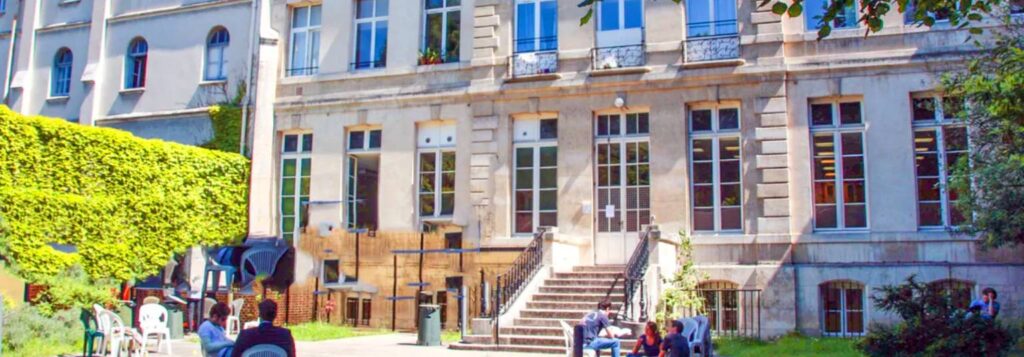
IPC — Facultés Libres de Philosophie et de Psychologie — trains students in philosophy, psychology, and the social sciences with a strong emphasis on applied knowledge and ethical engagement with the world. This Erasmus+ programme organized with IFFD is a direct expression of that mission. It is designed to close the gap between research and impact — to give students real experience of how knowledge is gathered, analysed, and then transformed into advocacy that reaches policymakers.
More information and Applications Here