
By: Alexandra Nadane and Stefana Totorcea, Basilica News Agency
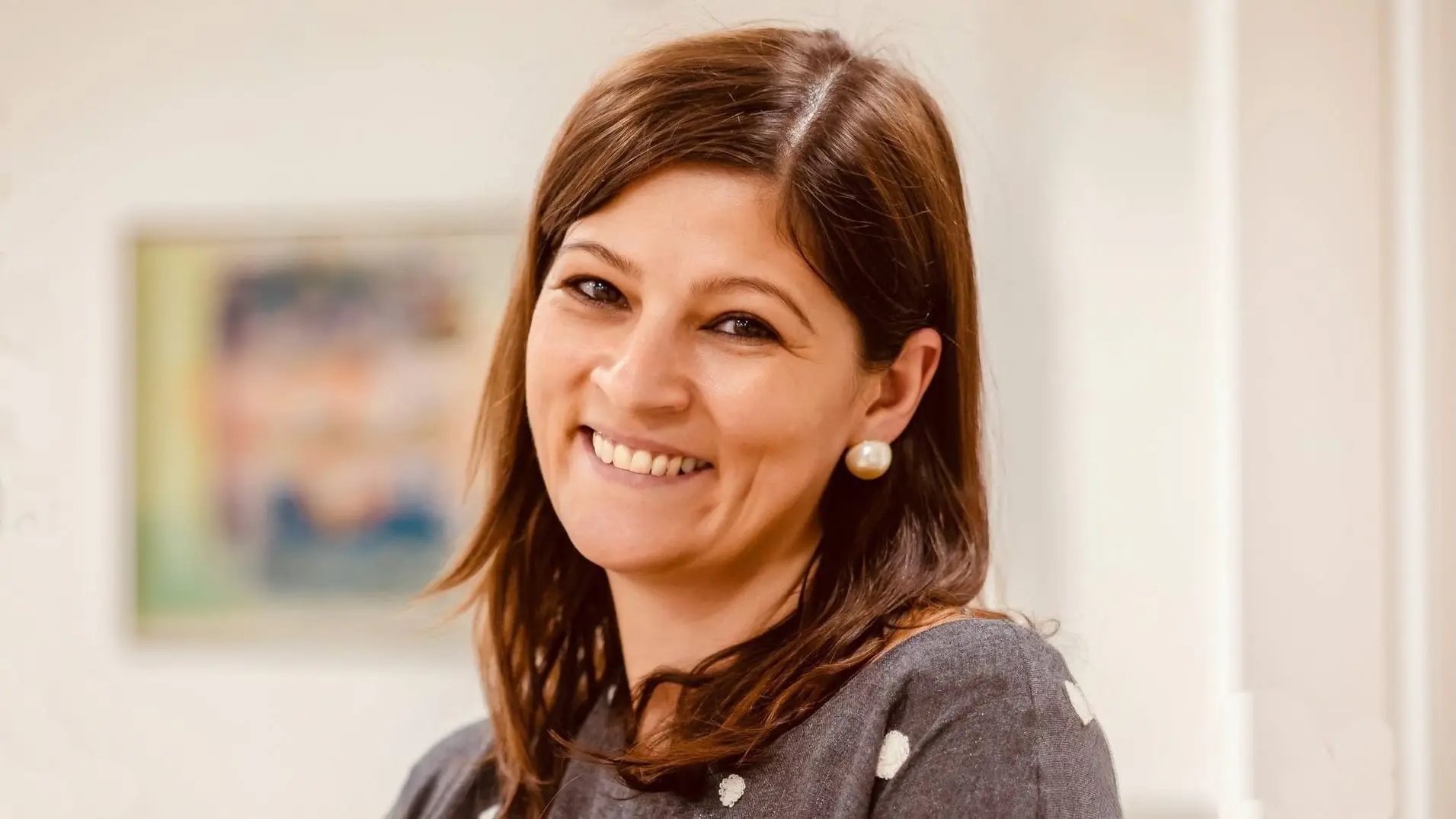
The guest of Alexandra Nadana’s #FridayforLife column this week is Irina Granzulea, mother of three children – two girls and a boy – and president of the Association of Large Families (ASFANU).
Starting in 2020, she has put over 10 years of experience in the private and public sectors at the service of the organization. She is an economist and international relations specialist, dedicated to strengthening ASFANU and promoting large families, both nationally and internationally.
In the interview given this year – designated by the Romanian Parliament as the National Year of the Child – Irina Granzulea talks about the challenges of large families in Romania and the need for Romania to integrate support policies present in the European space.
The beginnings of involvement
What motivated you to become actively involved in supporting large families in Romania and how has your vision of the large family evolved over time?
I started with a Google search about the rights of large families when our third child was born. It was 2019 and at the time I believed that large families in Romania enjoyed the same rights as large families in Europe.
I didn’t find rights for large families, but I found the association’s website and, since then, I have been an ASFANU volunteer and actively involved in promoting the rights of families with three or more children.
Over time, like me, parents of three or more children joined the association as volunteers, and so we managed to build step by step a voice and a community of large families in Romania.
The situation in Europe
And we are not alone. In Europe there is a European Confederation of Large Families (ELFAC), which supports the rights of large families and brings together 29 associations of large families. ASFANU has been a member of ELFAC since 2020, and since 2024 it has been part of the board of the confederation.
Belonging to this European family is of great benefit, because we see the facilities that large families enjoy there and we collaborate with European associations, so as to bring these functional models to Romania. The countries where large families enjoy the most consistent support are Spain, Hungary and Poland.
That is why we applied for the first ERASMUS+ project for adult education, which we successfully completed this year. Through the project “Together for Large Families”, ASFANU volunteers, parents of large families, participated in a course organized by the Polish Association of Large Families ZDR3+. There they learned how to be citizens actively involved in promoting the rights of large families.
This journey of fighting for our rights is not always easy. There have been many moments when it seemed like we were fighting against windmills, but every time, a small spark appeared to confirm that our effort matters.
Either new volunteers joined the team, or another result of our efforts emerged. A result of our work that we are very proud of is the recognition that the Association received from the interim President of Romania, Ilie Bolojan – the “Order for the Promotion of Human Rights and Social Commitment”, in the rank of Knight.
I believe that every family that joins us at ASFANU, every person who participates in our activities or studies, who appreciates a message or simply understands better what a large family means, represents a step forward. All this motivates me to continue alongside extraordinary people in this beautiful story of large families.
Draft law for large families
What are the main challenges faced by large families in Romania and how does your association contribute to changing social mentality in their favor?
The biggest challenge is related to the fact that large families are not defined in the legislation, such as single-parent families. And it is such a simple definition, a family is large when the number of adults is less than the number of children, that is, when there is not one adult for each child in the family, who is in charge of raising, maintaining and caring for them.
And, because this definition is not in the legislation, any proposed measure in favor of large families ends up hitting a legislative barrier, sometimes without even analyzing its essence or impact.
ASFANU contributed in 2020 to the initiation of a legislative project containing this definition and a series of rights for large families. Earlier this year, after years of stagnation, the draft law was analyzed by the Health and Family Committee of the Chamber of Deputies, which decided to continue the debates on this project.
Large families: over 1.5 million Romanians
Another important challenge is that the role that large families play in society is too little known, even though it is so important. That is why we are constantly campaigning to educate the public with real information and data about large families.
In Romania, large families are invisible in statistics and public debates. ASFANU is the only organization in Romania that publishes updated statistical data on large families: there are over 300,000 large families with dependent children, that is, over 1,500,000 people.
We are an important category of the population, which contributes to the demographic future of the country, the only category of families that ensure the replacement rate, with over two children born, but which do not benefit from public policies correlated with the reality of their lives.
What benefits do these families receive in other countries?
That is why ASFANU constantly promotes the need to introduce coherent policies, based on data and adapted to the real situation of large families.
Successful models exist, we see them in the European Union, where support for families of 3+ is materialized through tax benefits, access to education, transportation, housing, etc. We want Romania to follow these examples, not as social support measures, but as a long-term development strategy.
Prejudice in society, the biggest challenge
How did you perceive society’s general attitude towards large families?
The biggest challenge facing large families is prejudice. ASFANU conducts an ongoing study among large families to highlight who they are, how they live, and what their needs are, and an overwhelming proportion of families said they wanted to no longer be judged in society, but understood.
In Romania, large families face a constant wave of prejudice and stigma. In the eyes of many, having more than two children is perceived as a social anomaly, and reactions are often one of amazement and judgment: “How do you manage with four, when I can’t even manage one? “
An investment in the future of society
There are also much harsher negative labels. Families with multiple children are frequently labeled as “welfare recipients,” when in reality, most receive no support beyond child benefits, which all children receive, regardless of family size.
Other prejudices associate large families with a particular religion or lack of education, ignoring the fact that the choice to have three or more children is a conscious and assumed choice.
For parents of families of 3+, these judgments are painful and they end up in the paradoxical situation of having to justify why they have a large family.
Large families, instead of being supported or even respected, often have to defend their right to normality and dignity. Judging them helps no one, but understanding and supporting them can make a huge difference, not only for these families, but also for the future of society.
Invisible families
What projects and initiatives have you implemented to educate and raise public awareness about the value and importance of large families in our communities?
For us, educating and raising public awareness about the value and importance of large families has always been a priority.
In a society where these families are often invisible or perceived through prejudice, ASFANU has implemented various initiatives to bring to public attention their reality, challenges and their contribution to Romania’s demographic future.
An important first step was the development and publication of the first national study on large families, which provides real statistical data on the social status, standard of living and needs of these families.
Proposal: Family discount card
We have launched publications such as “Large Families in Figures”, which contain statistical data on families 3+ and a best practices guide for implementing the Large Family Card in Romania, in which we have brought together national, local and non-governmental models of discount cards for families. All of these have the role of substantiating our proposals with real information, not perceptions.
We also marked important days in the life of a family, such as International Family Day or International Mother’s Day, through workshops and community meetings. We organized conferences and meetings with experts, in which we addressed the topic of demography, the presence of large families on the labor market, or 3+ tourism.
We focused on building the 3+ family community through activities that bring parents and children from large families together. Parents need to share ideas and needs, and children need to meet children from other large families and understand that other children are like them, older or middle siblings in their families.
We organized educational workshops, excursions, recreational and cultural activities. Families from Brașov came together in a Choir of Large Families, and talented children from large families excelled in a performance event dedicated to them – the Gala of Talented Children from Large Families.
Two cities will adopt family-friendly policies
At the European level, through its membership status of the European Confederation of Large Families, ASFANU is the contact point in Romania for the European Network of Family-Friendly Municipalities.
This Network brings together over 160 municipalities in the European Union that promote family-friendly policies. Following the efforts of ASFANU volunteers, 2 municipalities in Romania have made this commitment to adopt family-friendly policies: Bacău and Brașov.
Through these initiatives, we wanted to support and make visible the contribution of large families, but at the same time to create a framework of respect, appreciation and support, for both parents and children. We educate by our own example, we create communities and bridges between people.
Public education and dialogue
In the context of social and economic changes, how do you see the role of the association in changing the general mentality about the family and in promoting a climate favorable to raising children?
The role of the association is to support parents in their communities to know their rights, to speak about them and for them, to support their children’s performances and talents, but above all to help the community, to support each other before expecting any support from the authorities.
The social and economic changes of recent years have brought significant challenges for all types of families, but large families feel these changes much more strongly. In this context, ASFANU’s role is to become a strong and constant voice in the public space, which will restore the value of the family where it belongs – at the center of society.
Promoting a climate favorable to raising children means, above all, public education and dialogue. Through projects dedicated to families 3+, studies and active presence in debates, we aim to change the perception that large families are a burden or an irresponsible choice.
ASFANU also assumes the role of bringing functional models from Europe to Romania, of working together with the authorities and the private sector for policies that support the family, such as fiscal measures or unrestricted access to the labor market for mothers 3+.
At the same time, we build communities where parents of 3+ want to get involved, so they can support each other and learn how to be active citizens. We believe that changing mindsets starts with recognition and respect.
The place where life begins and love never ends
What are, in your opinion, the best ways in which authorities, organizations and civil society can support the family in the long term?
First of all, by positioning the role of the family in society. The family is where life begins and love never ends. Without the family we would not exist and this is reflected in all areas of our lives, but despite this it is not among the priorities of public or private policies.
The best ways for authorities, organizations and civil society to support the family are those that combine coherent public policies with concrete actions at the community level. We need a national strategy on family and demography, which is detailed and applied at all levels: national, local and individual.
At the national level, starting a family must be encouraged through predictable measures: deducting expenses related to raising and educating children from taxes, policies to support work-life balance, as well as an architecture of care services adapted to the real needs of parents.
At the local level, authorities need to create family-friendly infrastructure and even departments dedicated to supporting it. On a personal level, I believe it is important for young people to understand the values and positive transformations that the arrival of a child brings into their lives, through education and real examples.
To fulfill their role, families do not need special treatment, but they do need to feel respected and valued in society, and this is something we all need to build.
The ideal environment for the development of parents and children
What message would you like to convey to both large families and those who are unfamiliar with their realities, to encourage a more open and respectful mentality towards family and motherhood?
Over time, I have met a lot of large families, with three, four, five and even nine children, and what remains a constant is the admiration I feel every time I discover their life stories. Because there is a courage and determination that I see in parents.
I see children learning team spirit and mutual help, I see mothers who have extraordinary professional training and life experience, I see children with special talents who deserve encouragement and support.
Behind these families, I see the strength and determination of the parents, I see parents who make huge efforts for the good of their children, I see mothers with professional training and extraordinary life experience, I see children who learn team spirit, empathy and responsibility, but also extraordinary children, with special talents, who deserve to be encouraged.
And seeing all this, I wish that society would know these things, understand how valuable it is to have a large family around them, understand what it means to have a friend who is also an older or younger brother at home, understand the values that a large family brings to society and no longer surround it with prejudices.
And for large families, my message is this: Don’t be discouraged! Your choices are valuable, they matter to you, to your children, and to your wonderful families.
Read the article here.