
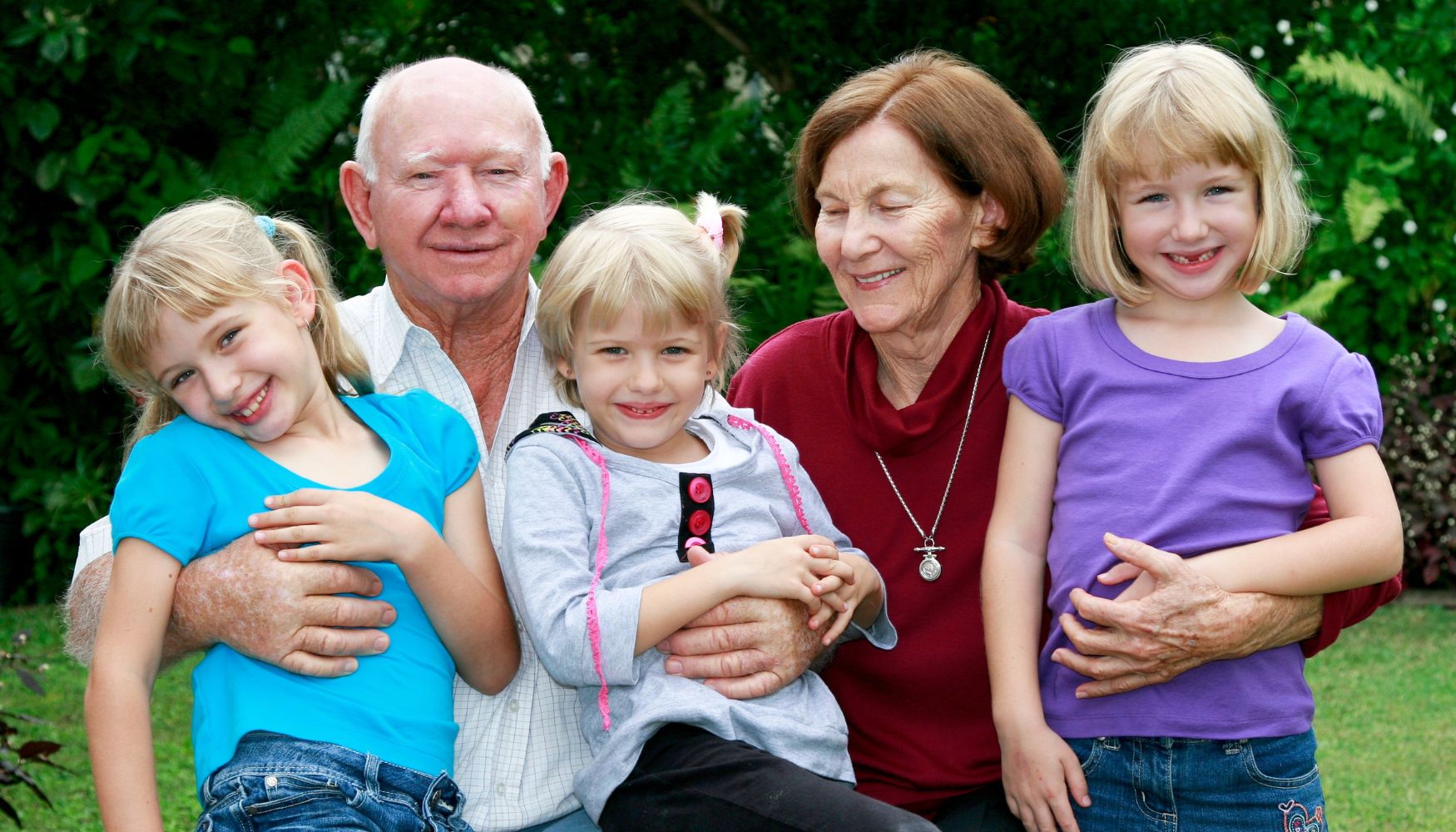
Almost 60% of families entrust their children to their parents in Italy: an increasingly structural help in an ageing country that loses sight of minors, just 9 million compared to 14.5 million over 65s
Published in Avvenire (02/10/2025)
They truly deserve today’s celebration. Italy’s 12 million grandparents are celebrated with a special national day, which by law has fallen on Guardian Angel Day for exactly twenty years. It’s a way of paying tribute, even if only symbolically and at no cost, to a group without which this country’s already precarious economic and social systems would collapse even further.
According to the National Institute for Public Policy Analysis, 57.9 percent of families—with little difference between the North, Center, and South—entrust childcare to their parents. This situation is confirmed by ISTAT, which reveals that a third of grandparents care for their grandchildren when their parents work. According to Coldiretti, this trend goes even further, with one in three grandparents also helping their children and grandchildren financially, despite the fact that 63 percent of seniors earn less than €750 a month in pensions.
Supplemental welfare for grandparents includes support for new parents and general babysitting, but also covers services such as nursery school—which, according to ISTAT, provides a place for less than 27% of children in Italy and involves a waiting list in six out of ten cases—transportation for grandchildren where school buses are lacking in 80% of schools (Legambiente data), homework help, and school lunches, given that, according to Cittadinanzattiva, full-time school is attended by fewer than two in five children and only one in two students have access to school meals.
The result—according to a very recent survey by AstraRicerche for Unione Italiana Food—is that three in ten grandparents spend more than three hours a day with their grandchildren , while 23% spend one or two hours with them, spent playing, outdoor activities, but also providing homework help, preparing lunch and snacks (managed daily by approximately four in ten grandparents), and accompanying them to classes and training sessions.
It’s therefore not surprising that upon the news of a pregnancy—but often also when deciding how to plan it—the answer to the question “do you have grandparents?” becomes the real deciding factor and makes all the difference in the world. While on the one hand, the grandparent-children-grandchildren alliance is a remarkable example of intergenerational collaboration and a vestige of mutual social support, on the other, the fact that the presence of the elderly is essential and almost structural for a state is a serious shortcoming.
Yet the situation will only get worse. According to the Openpolis foundation, in 2005, when Grandparents’ Day was established, the number of people under 18 and over 65 was roughly equal; today, however, there are fourteen and a half million over-65s, while minors number just nine million. In twenty years, the number of people over 80 has practically doubled, going from 2.4 to 4.1 million, considering the same national population: in 2005, they represented 4.2% of Italians, today they are 7 percent, and by 2045, they could exceed 10 percent.
The ratio of one child under 14 for every three elderly people is already a reality in Liguria, Sardinia, Molise, and Friuli-Venezia Giulia, and three Sardinian cities—Carbonia, Cagliari, and Oristano—rank among the oldest Italian capitals, followed by Ascoli Piceno, Biella, and Ferrara. At the other end of the scale, among the youngest cities, are Andria, Crotone, Barletta, Naples, and Reggio Emilia: here, for every child, there are fewer than two people over 65.The gap, caused by improving health conditions, the increase in life expectancy (which currently stands at 21.2 years at 65), and the decline in births (which will reach 370,000 in 2024), means that the state will have to channel funds into healthcare and economic assistance for the elderly, leaving on the sidelines—even more than they already are—policies supporting young families and the younger generations, for whom investments will be increasingly limited.
The few children will have no choice but to rely on grandparents, who on average will have a greater number of children available, but who—once again—will find themselves having to make up for a greater social gap. And the risk is that, in a country with ever fewer children, the plight of the little ones will lose all priority.