

Rules on bedroom allocation in affordable housing are tightening eligibility, with larger households hit hardest
Rules requiring children over the age of 12 to have their own bedroom are limiting access to social housing for families, stakeholders warn, with calls for the government to change the legislation.
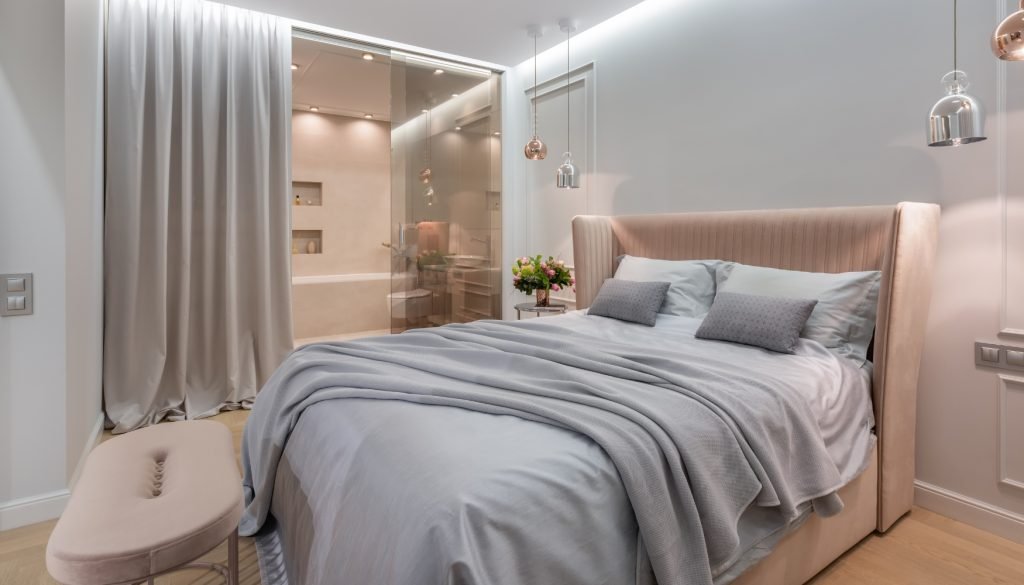
Under a 2024 rental law reform, a couple renting social housing must have a separate bedroom (instead of using the living room, for example), with children aged 12 or over also required to have their own rooms, meaning siblings cannot share. In place for two years, these rules are adding pressure to an already constrained social housing market, particularly for larger households.
“For families with more children – more than three – it becomes increasingly difficult to find social housing, because most available houses or apartments are, by their very nature, designed for traditional families with two, at most three, children,” said Sandy Lopes, director of the City of Luxembourg’s social office. She added that in cases of larger households, the rule requiring each child aged 12 and over to have their own room further complicates access, particularly for families with four, five or even six children.
“There should be other alternatives to this rule regarding a separate bedroom for children aged 12 and over,” Lopes said. “For example, girls could share a room.”
The rules also force families to change homes as their children age.
“We have already noticed that families with more children are finding it harder to secure affordable housing because of the rules imposed, meaning they end up spending even longer on the waiting list. There are fewer social housing properties with enough bedrooms to accommodate these households,” said Sofia Fernandes, secretary of Mieterschutz Lëtzebuerg, a tenants’ rights group.
“In the private rental market, the problem does not arise in the same way,” Fernandes added, noting that there is no requirement for children above a certain age to have separate bedrooms. However, she said families with children still face broader difficulties in the private sector, as many landlords prefer tenants without children.
“There are many families with children, even if they have just one child, who have problems renting a home on the private market,” said Lopes. “This is because many landlords prefer to rent to couples or childless tenants, to protect themselves in case they need to ask tenants to leave the property. With children, it becomes more complicated.”
Ministry says it is aware of the situation
Dan Biancalana, a deputy for the Social Democrat LSAP, raised the question in parliament, citing reports from stakeholders that highlight “the difficulties faced by some households in accessing housing that strictly meets the criteria, particularly in the case of large families or households already in a precarious housing situation.”
“The Housing Department of the Ministry of Housing and Spatial Planning was informed of a specific situation concerning a large family for whom it is difficult to find housing whose type corresponds to the size of their household,” Housing Minister Claude Meisch said in response to Biancalan’s question, adding that the case remains on the waiting list.
“The aim of ensuring that every person aged 12 or over, or every couple, has their own bedroom is to strike a fair balance between the growing need for privacy among young people going through puberty and the shortage of supply in the face of demand for affordable housing,” Meisch said.
He added that even if the limit were raised, such a change alone would not resolve the difficulties observed.
“The criteria in the regulation were adopted with a view to reconciling two objectives: on the one hand, guaranteeing quality housing and, on the other, accommodating as many families as possible, given the housing shortage,” the minister said.
A draft bill currently under discussion would refine obligations for social landlords, particularly in cases where a household grows and no longer matches the type of housing it occupies.
“In the event of overcrowding, the social landlord will have a period of three years to rehouse the tenant, except in cases of legitimate reasons, particularly those related to the health of household members, duly verified by the advisory committee on affordable housing,” the minister said. “The same bill also provides that, if the social landlord does not have a property corresponding to the household type within their housing stock, they may propose rehousing in a suitable property belonging to the housing stock of another social landlord.”
Although the regulation has been in force since 2024, no formal assessment has yet been carried out on its impact on families’ access to affordable housing. This is because, according to Meisch, such an evaluation depends on data from the National Register of Affordable Housing (RENLA), which only became operational on 1 January this year.
“The RENLA has been a strategic tool for better understanding and anticipating the real needs for affordable housing in Luxembourg, particularly in terms of housing types, thereby enabling the development of housing solutions adapted to demographic changes,” the minister said.
You can read more here: https://www.luxtimes.lu/luxembourg/bedroom-rules-in-social-housing-shut-out-large-families/155384931.html