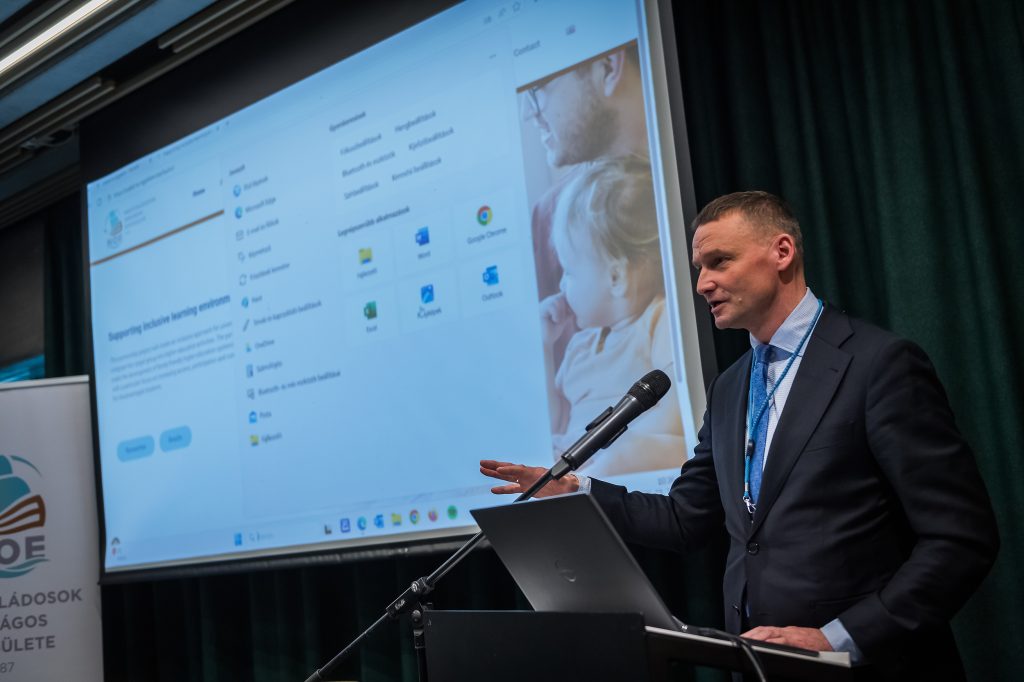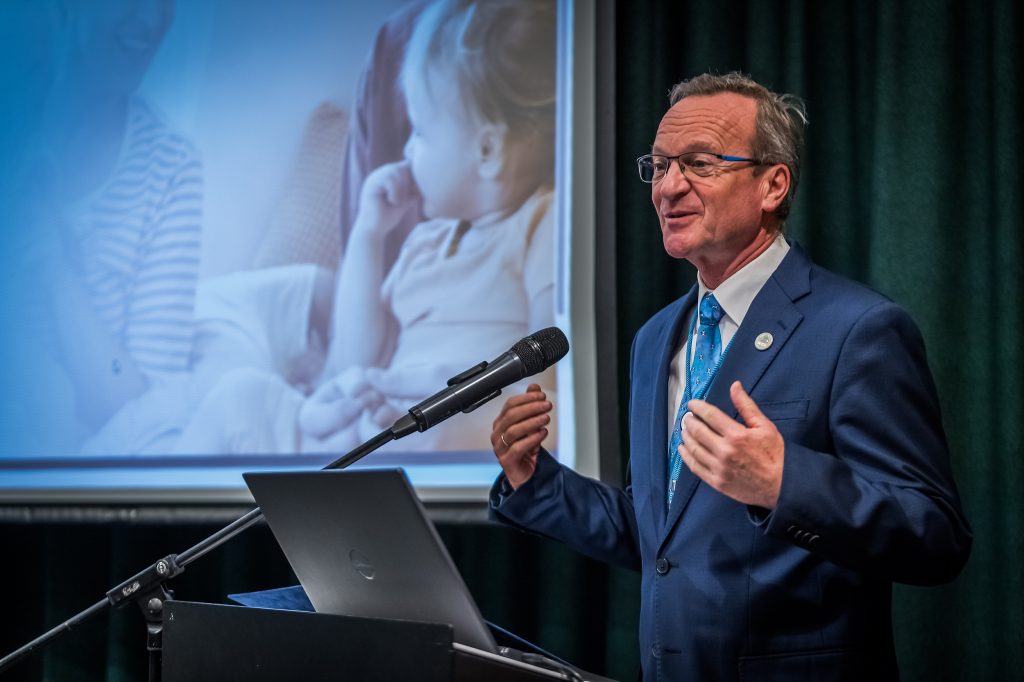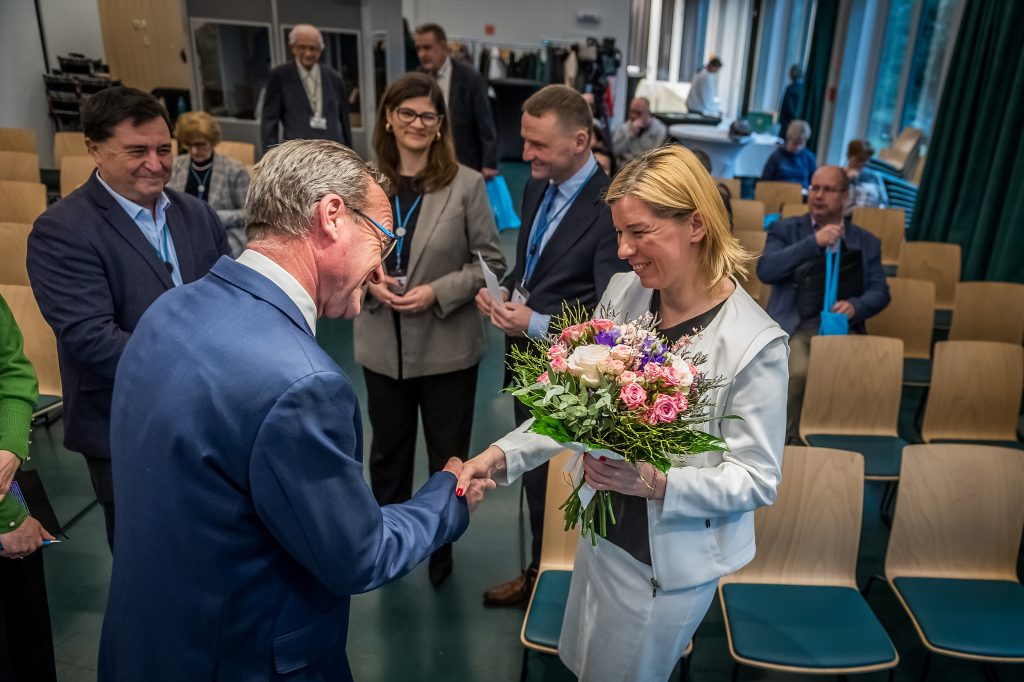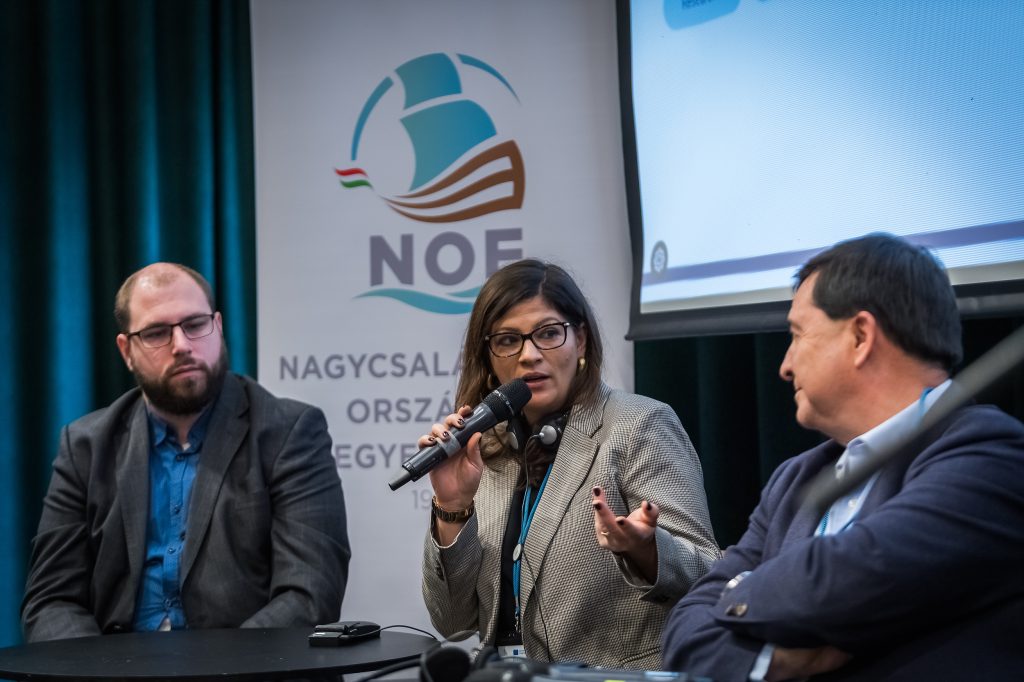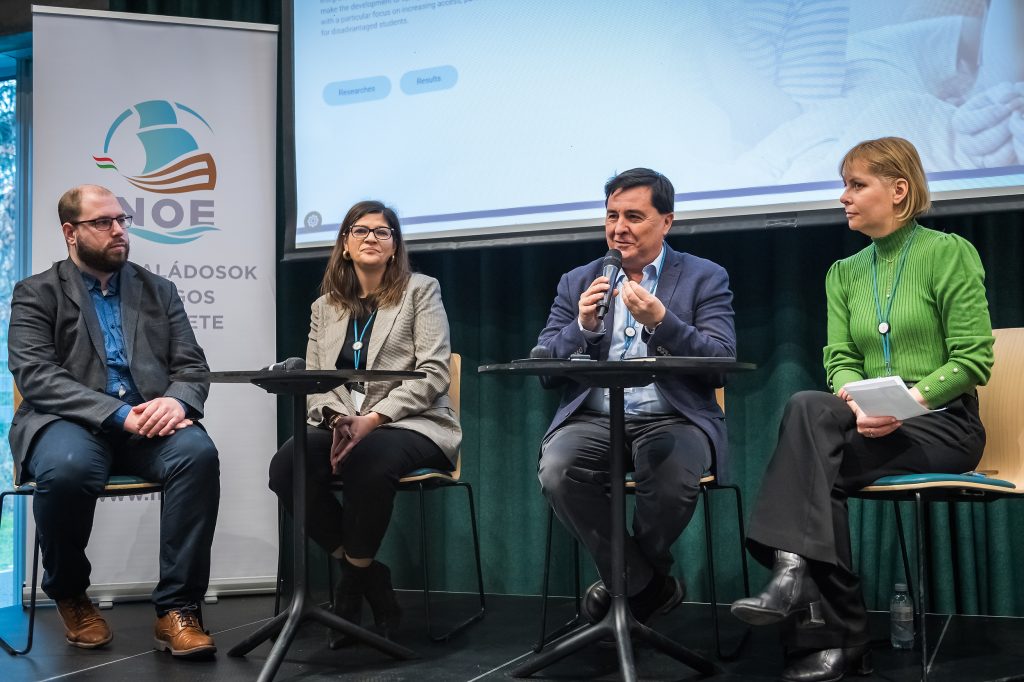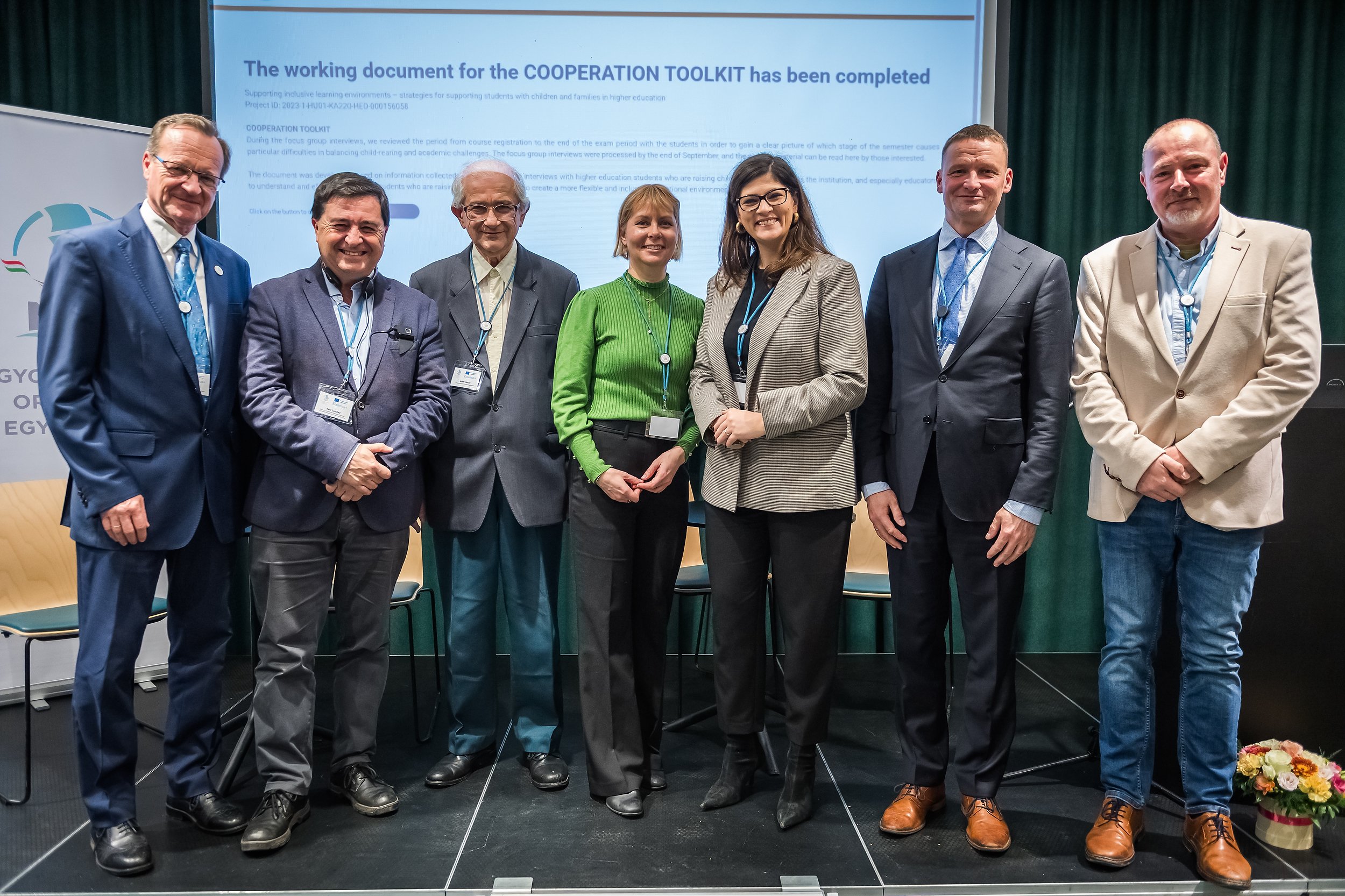
On January 30th, a conference for strategies for supporting students with children and families in higher education was held organized by NOE, the Hungarian Large Families Association
The conference marked the closing event of the Erasmus+ project “Supporting inclusive learning environments – strategies for supporting students with children and families in higher education”, which started in 2023.
Along with Irina Granzulea, president of the Romanian Large Families Association ASFANU, ELFAC’s president Radek Waszkiewicz, second vice president Kinga Joó and secretary general Raul Sanchez participated in the European conference. Laszlo Márki, honorary president of ELFAC, was also attending the event. Veronika Varga-Bajusz, Hungary’s Secretary of State for Higher Education, Vocational and Adult Education, and Youth, opened the conference stressing the significance of public policies that support all kinds of families, including student-parents.
The main aim of the Erasmus+ project has been to reduce the barriers for students with children in higher education institutions. The project, implemented in partnership with some universities, has created an inclusive approach for universities to integrate this target group into higher education activities. The partnership has made the development of family-friendly higher education systems a top priority, with a particular focus on increasing access, participation and completion rates for disadvantaged students.
Through the comprehensive resources and their use that has been generated as a result of the project, the partnership has aimed to implement inclusive, family-friendly curricula and practices in the participating higher education institutions. The diverse range of knowledge, experience and ideas of the international consortium has been combined and analysed from multiple perspectives, linking them together in a commitment to the European Education Area.
The project has included a comprehensive focus group research activity within the institutional framework of the partner organisations. Two research papers explored the challenges that families face in university life and the skills that teachers need to respond to these challenges. The research findings have been used to produce a toolkit – a document that provides guidance and methodological tools for teachers to support students with families in higher education institutions. The document is focused on specific skills needed to create an inclusive learning environment, such as communication, empathy and compassion, resilience and adaptability, technology and collaboration skills.
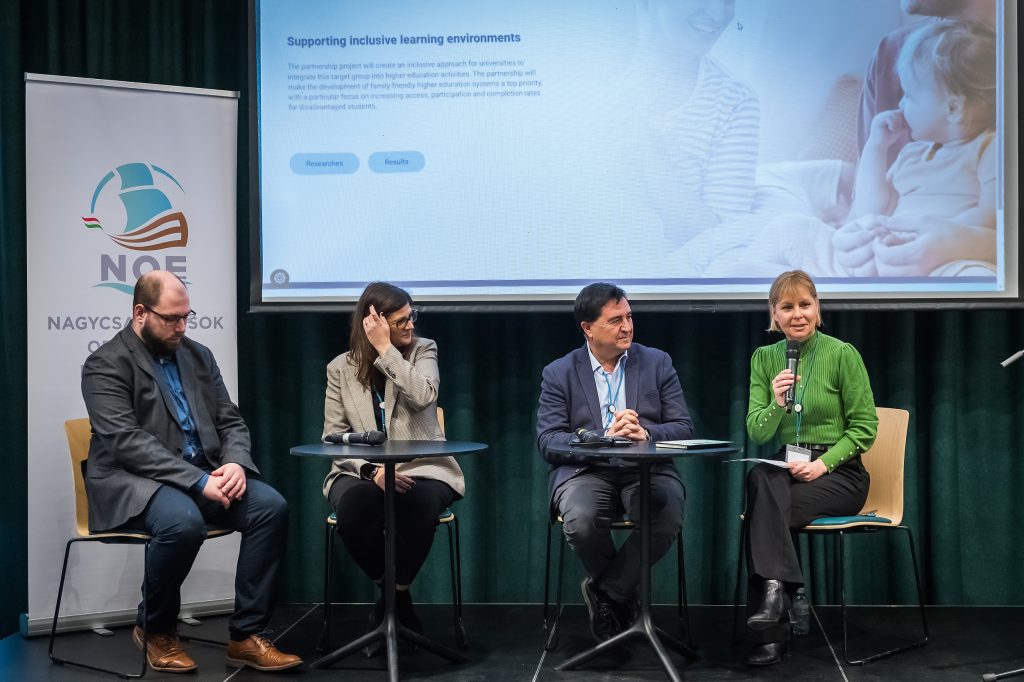
The conference has brought individuals who are highly knowledgeable in higher education to come up with ways to help student-parents. In the panel, the speaker’s main focus was dicussing how specific challenges interfere with students facing difficulties of parenting while also studying. This includes finding childcare, financial burdens of being a parent and student simultaneously, and academic obligations.
Universities can use the solutions that were shared in the panel to create a more family-friendly learning environment. The day was marked by transparency, lively discussion, and a dedication to making sure that parent-students are no longer invisible in higher education systems.
More information about the project here.
Book of the project “Between cradle and degree. Student parents in higher education” here.