Policymakers, academics, legal experts, and civic leaders from Europe and the United States gathered in Brussels, Belgium, on May 12, 2026, for a day-long policy exchange entitled “Bridging Continents: Transatlantic Dialogue on Family Policy,”
The event was co-hosted by the European Union & International Affairs Office of The Church of Jesus Christ of Latter-day Saints and Sutherland Institute. It brought together voices from across both continents as part of the 2026 initiative “Building a Resilient Future,” which examines how rapid social, economic, and technological change is reshaping family life across societies.
Francesco Di Lillo, Director of the EU & International Affairs Office for the Church, opened the conference by framing the day’s central question: “How do we help families remain stable, resilient, and free to flourish amid rapid social, economic, and technological change?” He emphasized the transatlantic spirit of the exchange: “We want to see the experiences from our friends from the United States, hear the experiences from our European friends — see what works, what doesn’t work, and what can be adapted across cultures and institutional areas.”
The conference unfolded across five sessions, with speakers representing academia, law, government, and a rising generation of young professionals. The opening academic session viewed how economic instability, labor market pressures, and housing affordability are shaping family formation on both continents. The effects of technology on family life were also a significant focus of the morning sessions.
According to Lois Collins and the American Family Survey, 71% of people think that having a child is simply not affordable: the cost of raising children, the anxiety for the the recurrent crisis including social media and a lack of confidence in the ability to afford family life which display and an attitude of less hope for the future, pushing the steady decline of fertility rates in the US, now at 1.79.
The impact of digital technology on children and families is huge, said Melissa Mckey, president of the “Digital childhood Institute” – making it difficult for parents to control it: now 45% of children under 3 in US use smartphones and artificial friendship with a chat box is a reality for more than a half of the States’ teens, with 27% of men under 30 that have never had a romantic relationship. Javier Fiz Perez, Director for the European Institute of Positive Psychology in Madrid, talked about a clear strategy against family, but, he said, “young people are looking for good words on families”.
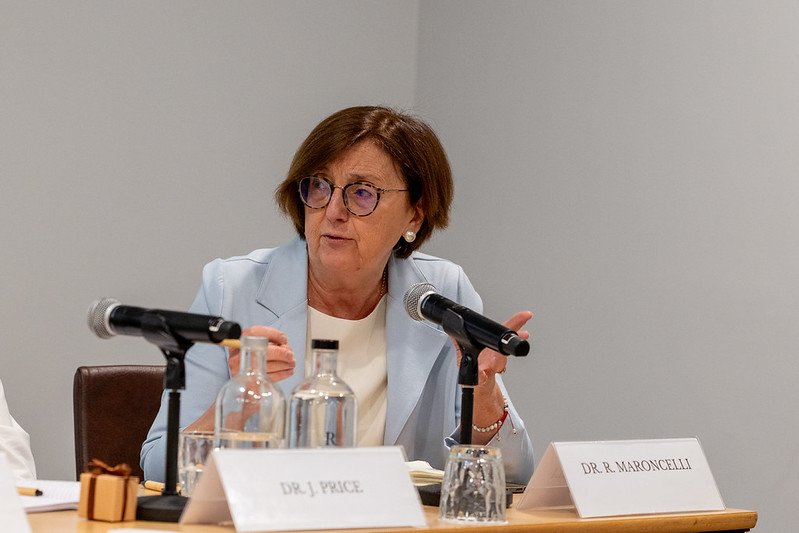
Today’s negative narrative of family life was underlined by Maria Regina Maroncelli Florio – vice president of ELFAC: “Family is a resource, not a burden”, said Mrs.Maroncelli, ”and contributes to the State and its welfare much more than it gets”. States should invest in families, she added, with holistic family centered policies to create a “family friendly” society.
A legal session examined the frameworks shaping parental rights and family autonomy on both sides of the Atlantic. Dr. Vincenzo Bassi, President of the Federation of Catholic Family Associations in Europe (FAFCE), addressed the challenge of EU institutions influencing family policy through indirect legal mechanisms and what he described as “competence creep”, despite family matters formally remaining within the exclusive competence of member states.
The afternoon policymakers’ session featured Senate Minority Leader Luz Escamilla and Senator Majority Heidi Balderree of the Utah State Senate, who spoke about practical legislative measures including childcare tax credits for small businesses, infertility treatment access, and legislation requiring state agencies to consider family health and stability before adopting new policies.
A video address from Prof. Assunta Morresi, Deputy Chief of Cabinet to Italy’s Minister for Family, Natality and Equal Opportunities, outlined Italy’s national approach to family policy, including strengthened parental leave provisions and the expansion of local family centers as a model for long-term structural investment.
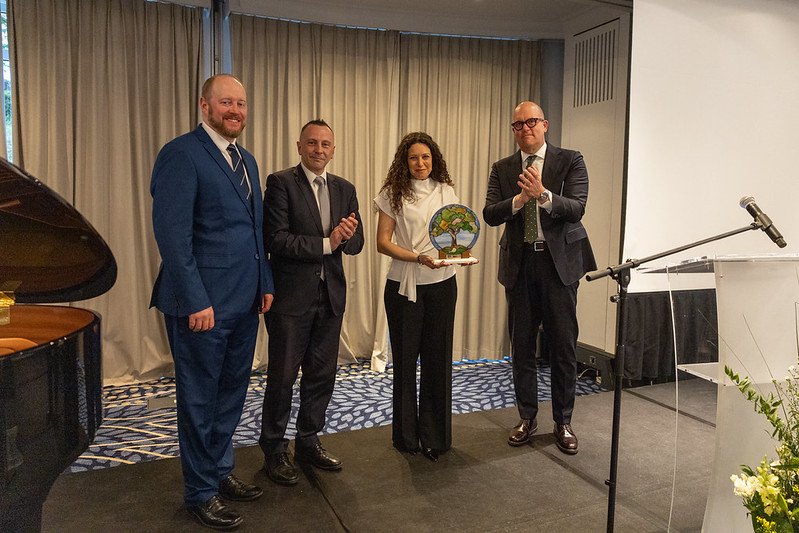
That evening, invited guests gathered for the 2026 European Family Values Award Dinner, where Antonella Sberna, Vice President of the European Parliament, was honored for her contributions to strengthening families in Europe.