
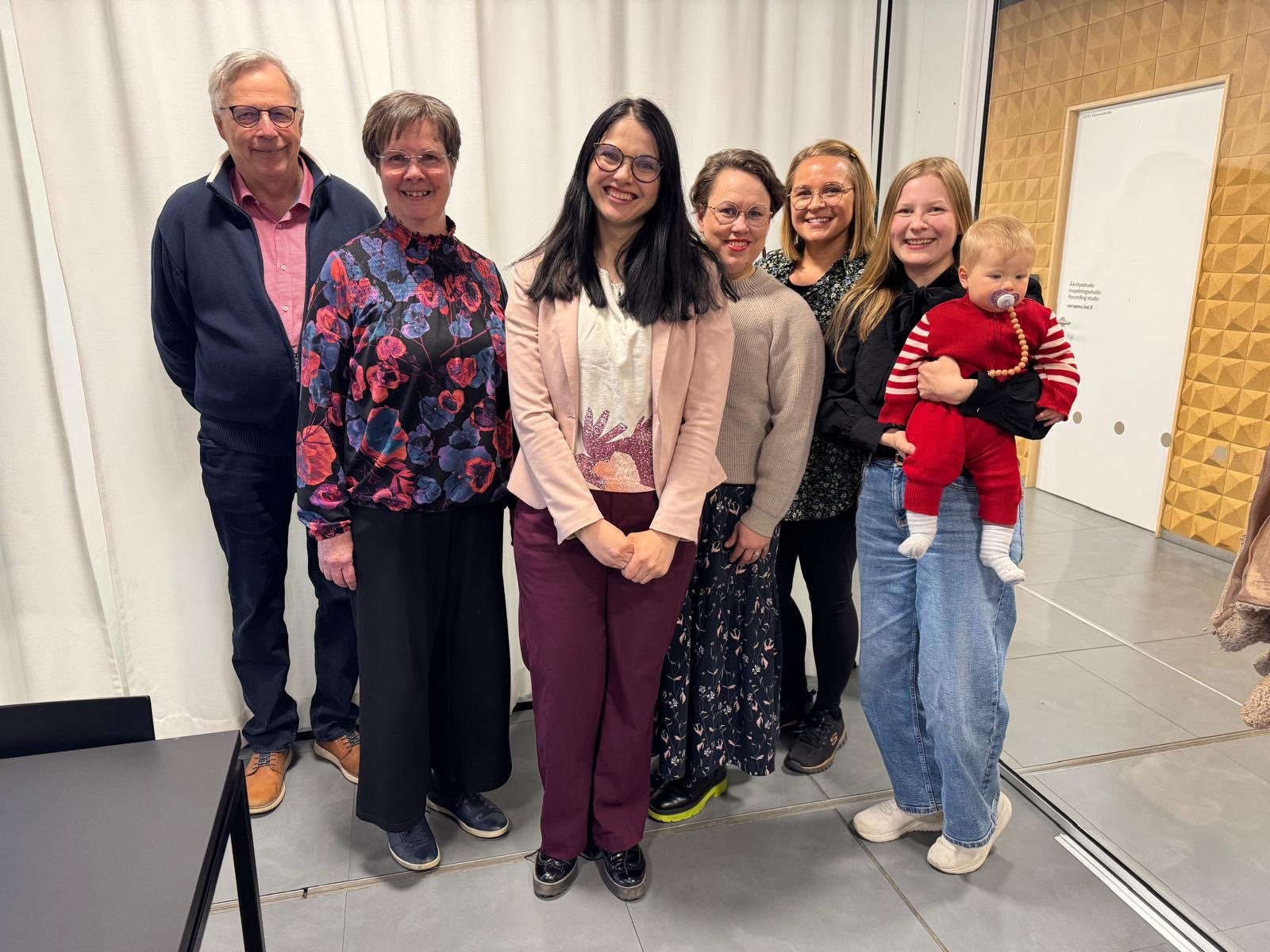
The Parents’ Association of Finland, which focuses particularly on large families and new member of ELFAC, has been very active during April and May
This is a summary of the main initiatives carried out recently:
25 April 2026 – Annual meeting and 25th anniversary year

Lapsiperheiden Etujärjestö ry (Lape) held its statutory annual meeting on 25 April 2026 at Helsinki Central Library Oodi. The year 2026 marks the organisation’s 25th anniversary, making it an important moment to reflect on Lape’s long-term work for families with children in Finland. The annual meeting reviewed the Annual Overview 2025 and elected the board for the new term, with Kristiina Paju continuing as chairperson. Read more (in Finnish).
25 April 2026 – Annual Overview 2025 published
Lape has published its Annual Overview 2025, which presents the organisation’s advocacy work, public statements, cooperation, events and key themes from the previous year. The overview also highlights Lape’s growing international cooperation and includes a dedicated section on international Lape activities, where readers can find information in English. Read more of what Lape did in 2025 here.
25 April 2026 – New strategy for 2026–2029
At the annual meeting, Lape published its new strategy for 2026–2029. The strategy sets out five priorities: a safe start for every child, supporting parenthood as an investment, economic security as a child’s basic right, ensuring that no family is left alone, and recognising that a good childhood supports the whole of society. Find the strategy here (in Finnish).

25 April 2026 – Family impact assessment alongside child impact assessment
Lape also published its annual meeting statement, A child grows in a family – decision-making must see both the child and the family. The statement argues that child impact assessment alone is not enough: family impact assessment is also needed, because children’s wellbeing is closely linked to family income, care continuity, parental resources, everyday functioning and access to services. This statement was published as an opinion piece in many regional newspapers. Lape has since published a draft version of the Family Impact Assessment Model on the website. Read more here (in Finnish).
15 May 2026 – Statement on child benefit reform
On the International Day of Families, 15 May 2026, LAPE published a statement warning that the proposed reform of Finland’s child benefit system must not weaken families’ income security. Lape supports extending child benefit until the age of 18, but stresses that this must not be done at the expense of other families, especially large families. The organisation calls for preserving and strengthening sibling supplements, protecting single-parent supplements, improving the purchasing power of child benefits, and carrying out a comprehensive child and family impact assessment before further preparation. Read the statement (in Finnish).
Election programme for 2027–2031 in preparation

Lapsiperheiden Etujärjestö ry is currently preparing its parliamentary election programme for the Finnish parliamentary term 2027–2031. The programme is still in development and will be published later this year.
The working title of the programme is “A child grows in a family – not in a system.”
The central message is that Finnish family policy must return to a simple but often forgotten starting point: children’s wellbeing is built primarily in families, and public policy should strengthen parents’ ability to provide care, stability and everyday security.
The draft programme responds to several Finnish realities. Finland is facing historically low birth rates, increasing financial pressure on families with children, and growing concern about the wellbeing of parents and children. At the same time, many families experience the current support system as fragmented, bureaucratic and uneven. For example, the financial conditions for home care, private childcare and municipal early childhood education differ significantly, which can limit families’ real freedom to choose the care arrangement that best fits the child and the family situation.
One of the key proposals under preparation is Tasaraha 2.0, a child-based family policy reform where public support would follow the child instead of being tied mainly to existing service structures. The idea is to create a clearer and more predictable child-specific resource that could support different forms of care, including municipal early childhood education, private care or home care. The aim is to reduce financial inequality between different childcare choices and recognise parents as the child’s primary educators.
The programme also highlights mothers’ health after childbirth, financial security for families with children, the needs of families with three or more children, and the need for a national parenting and upbringing strategy. These themes reflect Lape’s broader concern that family policy should not only repair problems after families are already in crisis, but support families early enough in ordinary everyday life.
The final election programme will be published later in 2026 and will be used in Lape’s advocacy work ahead of the 2027 Finnish parliamentary elections.