

France now has the lowest average number of children per woman since the end of World War II. Decisions about whether to start a family, have more children, or have none at all hinge on multiple factors, including inadequate childcare options, rising job insecurity, and the ongoing housing crisis.
Demographic trends evolve slowly by nature, but at times, statistics reveal historic shifts in human behavior. Such is the case with the 2025 demographic report republished on Tuesday, January 13, by France’s National Institute of Statistics and Economic Studies (INSEE). For the first time since the end of World War II, the annual study shows that deaths outnumbered births. France has not recorded so few births since 1942.
Beyond its symbolic weight, this crossing of curves highlights the aging of the country’s population. Soon, the number of people over 65 will surpass that of those under 20. Fourteen years after the birthrate began to decline, France – long an exception in Europe for its demographic vitality – now has a fertility rate of just 1.56 children per woman, its lowest since 1918 and far below the replacement level. Immigration continues to be the main driver of demographic growth.
While this demographic shock is unprecedented in France, it is part of a global trend of declining birth rates tied to development levels. This phenomenon, striking everywhere except Africa, confirms that economic growth and improved living standards, after initially boosting population growth – particularly by reducing mortality – now produce the opposite effect. This reversal stems from both changing lifestyles and mindsets, as well as growing material challenges and concerns about the future of the world.
In France, as across Europe, the gradual shift since the 1970s from the “duty to have children” to the “desire to have children” – which for centuries placed the burden of reproduction squarely on women – represents major progress. It has strengthened the idea of parental responsibility, but also made the decision to have children more daunting.
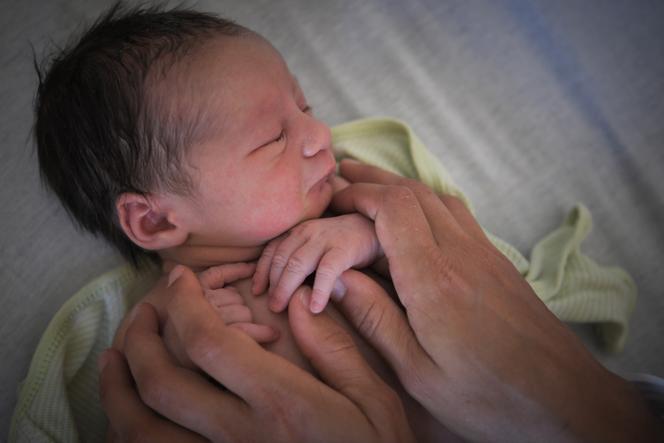
The choice to start, expand, or not have a family depends on a wide range of factors, none of which can be singled out. Anxieties about climate and geopolitics may play a role, but so do inadequate childcare options, increasing job insecurity, and irregular work schedules, as well as France’s severe housing crisis. These are all urgent areas for public policy, along with education on parenthood and support for single-parent families. A well-managed immigration policy, coupled with robust integration measures, is also part of a possible solution.
‘A form of myopia’
There is no need to invoke the refrain of France’s supposed “decline” – this is a global trend – to recognize the serious consequences of the demographic crisis. The pay-as-you-go pension system, to which the French are deeply attached, is threatened by the widening gap between contributors and recipients. The country’s aging population places a strain on both public finances and its overall vitality. In December 2025, France’s Court of Audit pointed to what it described, with characteristic understatement, as “a form of myopia” in France’s failure to account for demographic change in its fiscal planning.
The warning applies across the board. From housing and pensions to education, working conditions, social protection, and France’s place in the world, no area of political action should be considered separately from the demographic challenge.
Editorial: France must prepare for its population decline
You can read more here: https://www.lemonde.fr/en/opinion/article/2026/01/13/france-s-population-decline-presents-a-political-challenge_6749384_23.html