
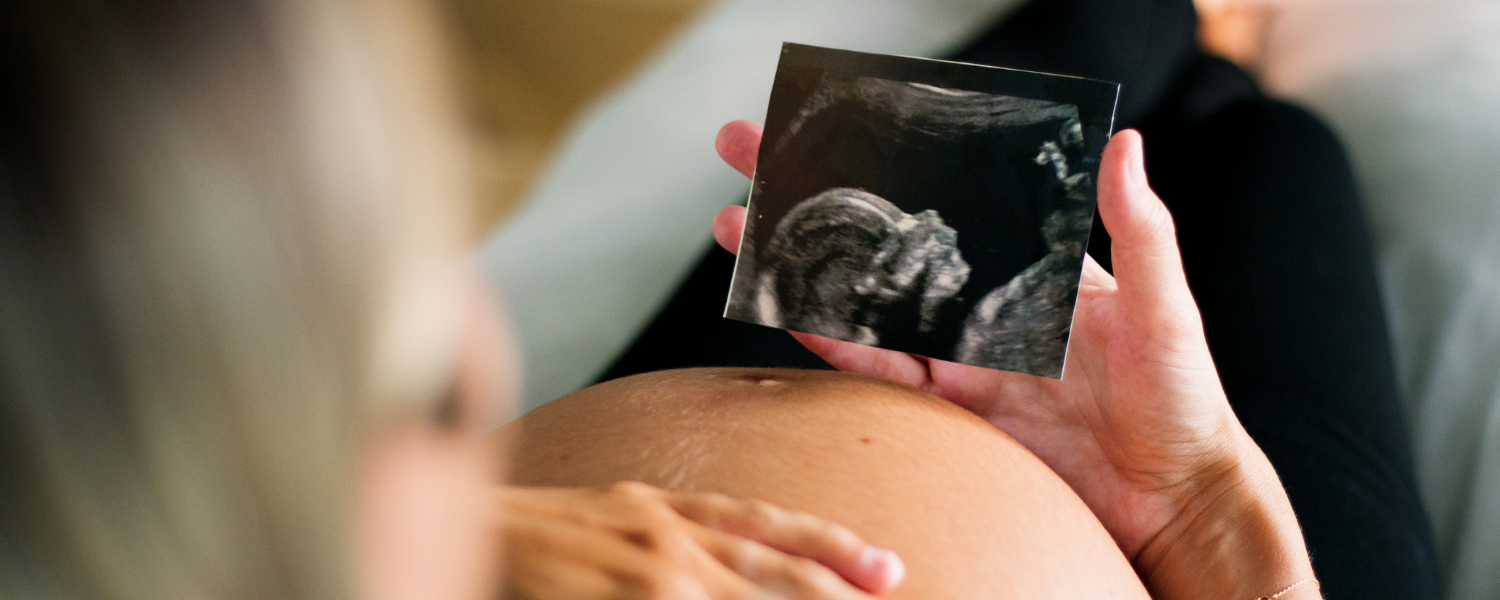
For some years now, various national and international media have been presenting us with a fragmented and impoverished image of motherhood.
By Georgina Trías, mother of 6
Originally published in Spanish on Women Essentia
On the one hand, recent articles such as the one published in Nature ‘The true toll pregnancy and childbirth take on the body’ (Nature, 27/03/25) put the focus back on the physical effects of pregnancy and childbirth, highlighting the after-effects, the physiological demands and the biological costs of giving birth. Several national media are also focusing on this issue. We read headlines such as ‘How pregnancy alters a woman’s body: quarantine is not enough to return physiological parameters to normal’ (El País, 26/03/25), ‘A study shows that a woman’s brain loses grey matter and volume during pregnancy’ (El País, 16/09/24), etc…
On the other hand, more than a decade ago, TIME Magazine surprised us with a cover that condensed a certain ideal of contemporary happiness: ‘The Childfree Life: When Having It All Means Not Having Children’ (Time, 5/08/2013), illustrated with a young couple lying on the beach, as a symbol of plenitude without offspring.
Although they come from different registers – one scientific, the other cultural – both stories share something fundamental: they present motherhood as a burden. Whether as an exhausting biological process or as an obstacle to self-fulfilment, the starting point is the same: having children is a cost. And in both cases, the essential is missing: the meaning, the gain, the gift of motherhood. Those intangibles that are quintessentially human.
In this context, headlines like the one in Nature are fallacious. Because to speak of toll – toll, price – without also speaking of fulfilment, transformation or joy is to offer a partial, almost instrumental, vision of one of the most radically human experiences: generating life.
Language is not innocent. ‘Toll’, “impact”, ‘loss’… are the terms that populate many recent articles on motherhood. In a way it is understandable: what is perceived as a benefit is less obvious, less quantifiable. But the fact that the good is invisible does not make it non-existent. Quite the contrary: what is most valuable about motherhood escapes metrics. It is not seen, it is not measured, it is not optimised. It is lived.
The most valuable thing about motherhood escapes metrics. It is not seen, it is not measured, it is not optimised. It is lived.
Yes, pregnancy changes the body. It increases blood volume, alters the respiratory system, changes the brain, widens the pelvis and leaves after-effects. It also mobilises immense psychological resources: strength, patience, vulnerability, fear, tenderness. Science is right to study it. It is right to recommend appropriate care, dignified maternity leave, postpartum follow-up, etc… But if we only see the ‘scars’, we lose sight of the fact that it is also, and above all, love, gratitude, donation and, even more so, longed-for waiting.
There are women who, when recalling their pregnancy or motherhood, do not speak only of effort or tiredness. They speak of fulfilment. Of having understood new dimensions of love. Of having found themselves again. Of having grown, not only outwardly, but also inwardly. And many of them, with a serenity that is difficult to understand from the outside, affirm that they would not change this experience for anything.
Pregnancy also stimulates the production of oxytocin, dopamine and endorphins. It generates well-being, bonding, pleasure. New neural connections associated with care and empathy are developed. The body adapts, yes, but it is also empowered. It reorganises itself to welcome.
What is fascinating is that even from a biological point of view, pregnancy does not only transform: it can also repair. During gestation, a phenomenon known as foetal microchimerism occurs, whereby foetal stem cells migrate into the mother’s body and remain in her tissues for years, even decades. These cells, with regenerative capacity, have been identified in organs such as the heart, liver and maternal brain, and their possible role in tissue repair, improved immune response and even some protection against disease is being investigated. This is further proof that the maternal body is not only affected by pregnancy: it is also strengthened by it.
And beyond the physical: motherhood generates meaning. It takes us out of the logic of efficiency and into the logic of gift. It reminds us that the body is not only made to produce or to perform, but also to sustain, to give, to love.
The body is not only made to produce or to perform, but also to sustain, to give, to love.
The worrying thing is that this logic of cost has permeated not only medical discourse, but also personal decisions. In the contemporary exaltation of the ‘I’, motherhood appears as a threat to autonomy, success and well-being. We are told that having children implies effort, limits, fatigue. That it interrupts sleep, complicates careers, consumes resources. Not having them, on the other hand, guarantees freedom. Under this undoubtedly misleading and biased narrative, motherhood does not appear as a good, but as a loss, also of freedom.
We are told that no one has the right to condition us, not even our children. But the truth is that no one is self-sufficient. Neither at the beginning nor at the end of life. We are born radically dependent. We need to be cared for, welcomed, supported. And this, far from being a limitation, speaks to us of our radically relational condition, and of the need to develop ourselves by cultivating the relationships that are properly human, beginning with those of filiation, maternity and paternity. Failure to do so plunges us into a loneliness that is not only physical but also ontological and existential.
On the other hand, it is with some bewilderment that we see how, paradoxically, technocratic solutions to a profoundly human question are being put forward as possible. The Norwegian sociologist Mads Larsen recently warned that the demographic winter is the ‘most serious challenge the West has ever faced’. And he mentioned the possibility of using humanoid robots – such as those Elon Musk plans to mass-produce by 2040 – as parenting assistants. According to him, if a woman can have access to all the goods, services and ‘robot nannies’ she needs, we could enter a ‘golden age of reproduction’.
The idea is symptomatic. It expresses a technocratic vision that attempts to neutralise the sacrifice and dedication inherent in motherhood, emptying it of its human dimension. But can a machine console a nocturnal cry with tenderness? What is clear is that the bond created in these moments can never be replaced by any robot, because it belongs to the world of the exclusively human interiority, impenetrable to a machine, however sophisticated it may be. These moments are creating the respective biographies of mother and child, and are irreplaceable, because they are part of their most intimate and personal inner world.
It is not the efficiency of care that is at stake, but the depth of the bond. And that bond is not programmed: it is embodied.
From a socio-political point of view, the ageing of the population, the falling birth rate and the rejection of motherhood are causing an unprecedented crisis. Collapsed pension systems, chronic loneliness, lack of generational replacement, loss of collective meaning. But the most alarming thing is not what is happening outside, but what is breaking down inside: we have stopped believing that the future is worthwhile. Existential emptiness and meaninglessness are rampant.
The question of motherhood is not only or even primarily political or economic. What is the human being: a solitary consumer, a cog in a chain of processes, or a relational being who finds meaning in the gift of self? If we agree on the latter, there is no more fruitful experience than motherhood, from conception to the bonds that are woven in upbringing, and which continue throughout life, purifying and maturing. In women, and in the development of their motherhood, the echoes of home resound, which every human being longs for and needs, certainly at birth, but also throughout life.
Having children – or wishing to have them – is a sign of hope
Having children – or wishing to have them – is a sign of hope, a commitment to life, an affirmation of goodness and love. And this desire cannot be imposed, we must connect with this ‘wanting’ to have children, but this wanting can only emerge if we connect with the source and origin of life, with our own life as a gift. And it is this awareness that opens up the desire to give life and to transmit it.
In the face of the narrative that idealises life without children as a cleaner, tidier and more comfortable path, it is urgent to rebuild a culture of love, service, care and fertility. A culture where having children – and desiring them – is understood as a profoundly human decision, rooted in the desire for self-giving, in openness to others and in the serene affirmation of life as a good in itself.
A civilisation that forgets this is heading not only for demographic collapse, but also for loss of meaning. For this reason, rebuilding a culture of bonding and fertility is not only a social necessity, but a profoundly human, spiritual and cultural task.
A task that begins by looking at women and motherhood again, not as a biological burden, but as a welcoming home, as a place of origin, of bonding and of hope.