
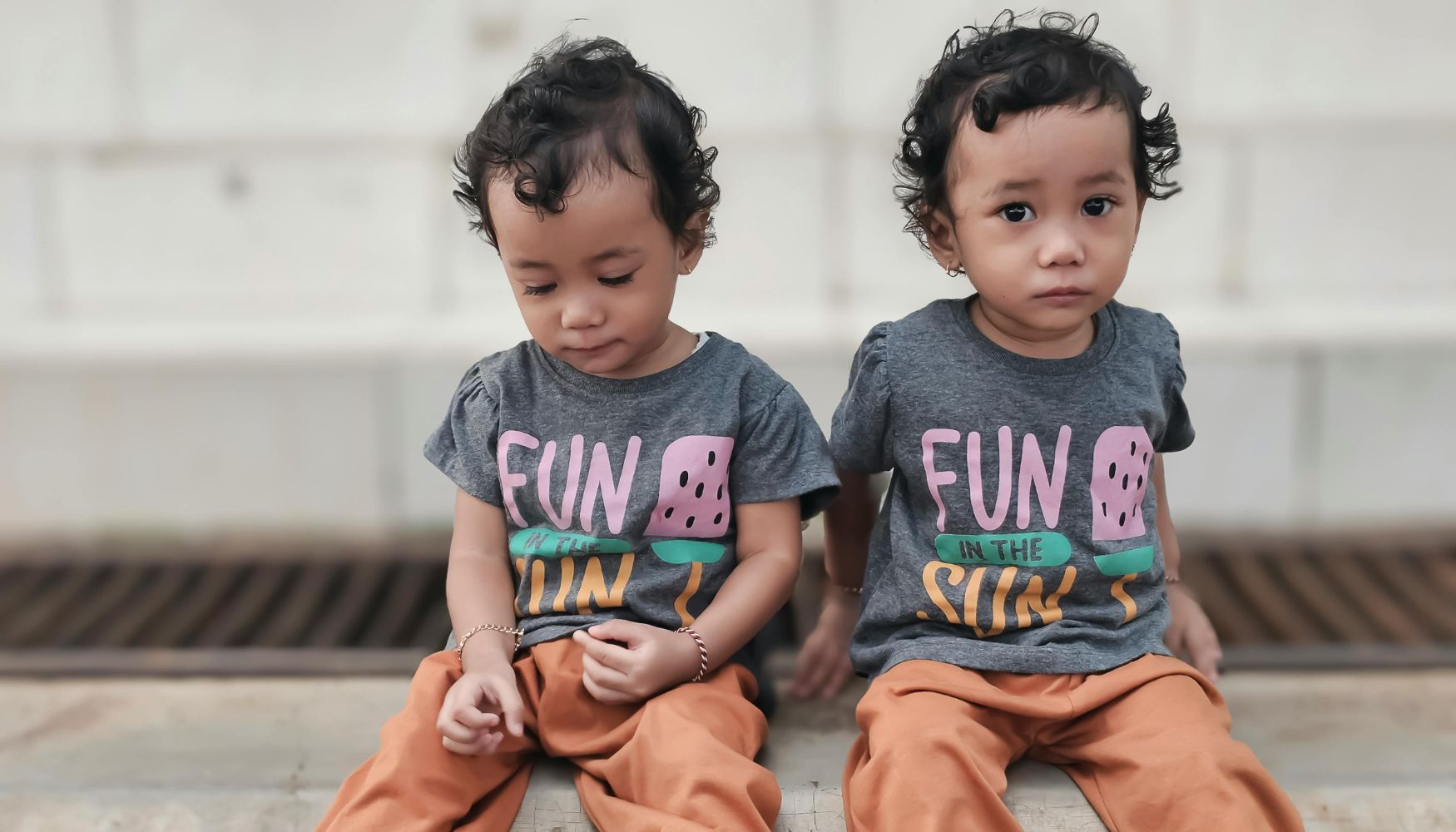
Mothers of twins summarize their claim simply: “A single child needs food, clothing, and care. A twin needs exactly the same things. There is no half hunger. There is no half sickness. There is no half child.” The Association of Large Families (ASFANU) filed an amicus curiae with the Constitutional Court and argues that each child should receive their own allowance
By Raluca Al Haddad – journalist at Prima News and Mihaela Mosora – vice president of ASFANU Association of Large Families, on cotidianul.ro
A family with twins receives over 56,000 lei less from the state than one with two children born successively but who are not twins. In fact, any child born while the mother is still on parental leave receives less money than the previous sibling, and the amount received is half that of his sibling. For twins, this means that the sibling born 2 minutes later receives half of the money of the firstborn. And if there are more, each receives half of the amount of the firstborn born. If there are quintuplets, meaning 5 children born at once, the mother receives the full allowance for the firstborn, and for the other 4 money as for two children. Parents say that the system treats the second twin and the others in multiple pregnancies as “halves of a child”. Including a premature birth can make the family lose money.
In each of the last three years, over 5,000 children were born from multiple pregnancies in Romania, 5,485 in 2024 alone. Their parents face all the expenses at once: food, diapers, treatments, often months of hospitalization. However, state support does not multiply with the needs and the number of children. On October 6, the Constitutional Court has the file on the table again that could change the rule.
“Everything is times three”
Diana gave birth to triplets by cesarean section at just 31 weeks pregnant, on the very first day of the year. Together, the three babies weighed just over five kilograms. Weeks of intensive care followed, and one of the children was intubated for 27 days.
Monthly, the family paid approximately 1,875 lei for powdered milk (25 boxes), 584 lei for diapers, and 2,400 lei for physiotherapy, two sessions per week for each child. That is almost 4,900 lei just for the bare necessities.
At that time, the state granted Diana the full allowance only for the first child. For the other two, she received a fixed amount of 1,250 lei each.
11,000 diapers in two and a half years
Alexandra, the mother of twins Ana and Teodor, did the math: approximately 11,000 diapers consumed in the first two and a half years. Like most parents of twins, she naturally comes to the same conclusion: the needs of the second child are not a fraction of those of the first. They do not consume a diaper together, just as they do not sleep on top of each other in a single-child bed.
Andra, a French teacher and mother of twins, points out that the problem is not just financial. A parent’s time and energy are divided simultaneously between two or more children who cry, eat, and get sick at the same time.
The safety net that twins don’t benefit from
The difference in treatment becomes obvious when we compare twins with siblings born shortly after each other.
For the latter, the law provides special protection: Article 9¹ of OUG no. 111/2010. If the second child is born within 12 months of the end of the first parental leave, and the new calculation would result in a lower allowance, the parent receives the same amount as for the first child. Without this provision, the short period between the two leaves would have significantly reduced the amount.
The result: two 22-month leaves, two full allowances, 44 months of support in total for the stay-at-home parent. From 2023, the remaining two months of each leave are reserved for the other parent, usually the father, and cannot be transferred.
The rule has a limit, however. If the second child is born right during the first leave, without the parent having returned to work, the state applies the same formula as for twins: full allowance for the first child and only 50% for the second.
The figures: 169,587 lei versus 226,116 lei
The 50% increase for twins was adopted by GEO 164/2022 and was to be applied from January 1, 2023. However, the application rules appeared only in September 2023, and the first increased payments reached the parents in November. Until then, only the minimum allowance of 1,314 lei was granted for the second child. The new formula improved the situation, but the gap remained considerable.
Let’s take a basic allowance of 5,139 lei gross per month:
- The family with twins receives 5,139 lei plus an increase of 2,569.50 lei, for 22 months. Total: 169,587 lei .
- A family with two children born in succession , the second one a maximum of one year after the end of the first leave, receives 5,139 lei for 22 months for the first child and, through Article 9¹, the same amount for another 22 months for the second. Total: 226,116 lei .
The difference is 56,529 lei to the detriment of the family with twins, i.e. 25% less. In addition, this one has only half the protection period (22 months compared to 44), although it raises two children with identical needs at the same time. The months reserved for the other parent exist in both situations, so it does not change the comparison.
All amounts are gross. From August 2025, the health contribution (CASS) of 10% is also deducted from the child-rearing allowance.
What does it mean for the state: savings or deferred cost?
On paper, the state saves. For a family with twins and an allowance of 5,139 lei gross, the budget pays about 56,500 lei less than for two children born successively.
In October 2025, approximately 2,120 children, the second twin or subsequent siblings in multiple pregnancies, were receiving the allowance reduced by half. According to our calculations based on official data, providing a full allowance for each of them would cost the state between 40 and 65 million lei per year, depending on the parents’ income. The amount represents a very small fraction of the social assistance budget.
The state, however, has an argument that the Constitutional Court has validated several times. The allowance is a right of the parent, not the child, and replaces the salary lost while the child is at home. A parent of twins misses work only once, so he receives only one allowance, increased.
Families respond that logic doesn’t match reality. Costs increase with the number of children, not the length of leave, and frequent prematurity prevents many parents of twins from returning to work on time.
High prematurity, higher costs from the start
Children from multiple pregnancies consistently represent 3.5% of all those registered for state benefits. The proportion has not changed in the last three years, even though the number of births has decreased by almost 16% compared to 2022.
The medical risks are much higher for these babies: about 60% of twin pregnancies and 75% of triplet pregnancies end prematurely. This means more hospitalizations and higher expenses from the first weeks of life.
The expected decision from the Constitutional Court
The Association of Large Families (ASFANU) filed an amicus curiae with the Constitutional Court last year, in the case regarding Article 5 of OUG 111/2010, which halves the allowance for the second twin. The association argues that each child should receive their own allowance, regardless of whether they were born alone or with their siblings. After several postponements, the next deadline in the case is October 6, 2026.
In the past, constitutional judges have rejected similar challenges, holding that the allowance is granted for the birth, not for each child resulting from it. For parents of twins, the question remains the same: is the second twin a whole child for the state or only half?
Mothers of twins summarize their claim simply: “A single child needs food, clothing, and care. A twin needs exactly the same things. There is no half hunger. There is no half sickness. There is no half child.”
All of this is about children born during the two years of parental leave and for those born within a maximum of one year after leaving this leave – for whom certain forms of support are granted. For those born more than one year after leaving parental leave, the allowance is recalculated based on the new salary (the one obtained after returning to work).