
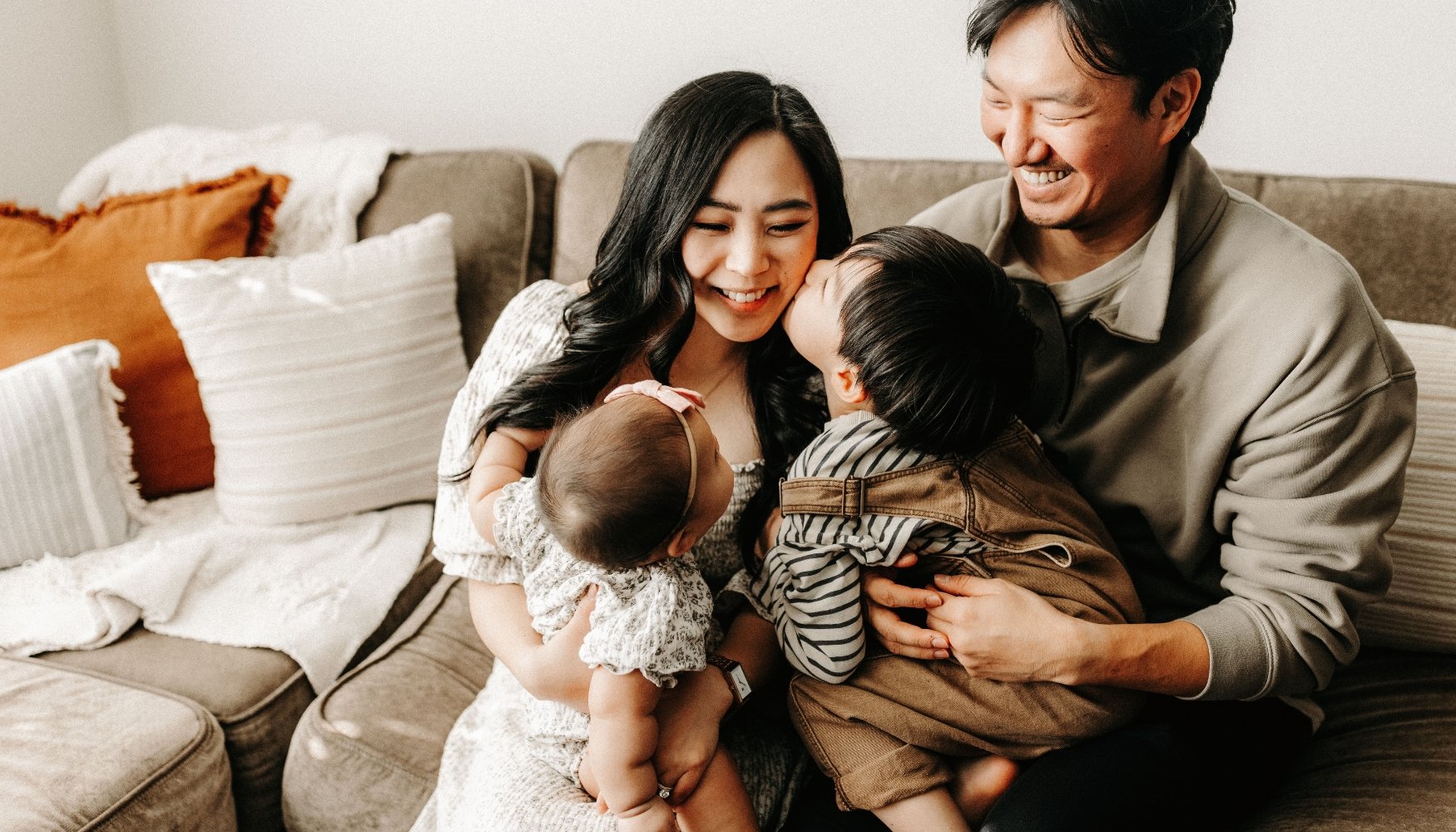
In an era when many Singaporeans stop at one or two children, a small group of parents is heading in the opposite direction with five or more.
Their ranks remain modest but steady, even as the total fertility rate has declined over the years and third-child births have become less common.
Amid Singapore’s baby woes, these large families stand out, often drawing curious stares and questions from members of the public.
According to the latest data from the Department of Statistics, the share of births of fifth and subsequent children has edged up in the past 20 years.
Among babies born in 2025, 2.1 per cent of them are their families’ fifth or later child, up from 1.5 per cent in 2005. In 2015, the figure was 1.4 per cent.
In 2025, 614 such babies were born, up from 558 in 2005 and 587 in 2015.
While these families remain a rarity, they offer a glimpse into a group making markedly different fertility decisions in a society often defined by careful family planning, concerns over the cost, and stresses of having children.
Academics told The Sunday Times that couples with many children are often motivated by a combination of religious beliefs, personal values and practical support systems.
Jean Yeung, director of social sciences at A*STAR Institute for Human Development and Potential, said religious beliefs and strong family-oriented norms are consistently associated with having larger families.
Yeung, who is also a professor in the Department of Paediatrics at the National University of Singapore Yong Loo Yin School of Medicine, added: “They are more likely to believe that children are blessings or gifts, discourage contraception or abortion, and have a stronger emphasis on marriage and family continuity.”
Kalpana Vignehsa, a senior research fellow at the Institute of Policy Studies (IPS), said couples usually calculate their finances, the impact on their careers, educational opportunities, and other costs and considerations when deciding how many children to have.
“Parenthood becomes something that is carefully managed and rationalised,” she said.
But practising a religious faith can change that. They may choose to leave their family planning up to God, she said.
She added: “Some religious couples may feel that excessive calculation itself is undesirable, or that faith requires openness to outcomes beyond one’s control.
“Raising many children may not be understood as a burden alone but as spiritually meaningful, morally worthwhile or deeply tied to identity and purpose. This can make families more willing to absorb costs and hardships that other middle-class couples may find unacceptable.”
Academics say practical factors also matter. Support from spouses and extended families, flexible work arrangements, among other factors, may also help them be open to having more children.
From wanting one child to having six
Growing up, Edric Sng never wanted a child. But when he got married, he thought he would have one – enough to satisfy his wife, who has always loved children.
Then he held his first-born son.
“Having a kid unlocked a part of my heart that I didn’t realise I had,” said Sng, a pastor in a Christian church and the editor of Christian websites such as Salt&Light.
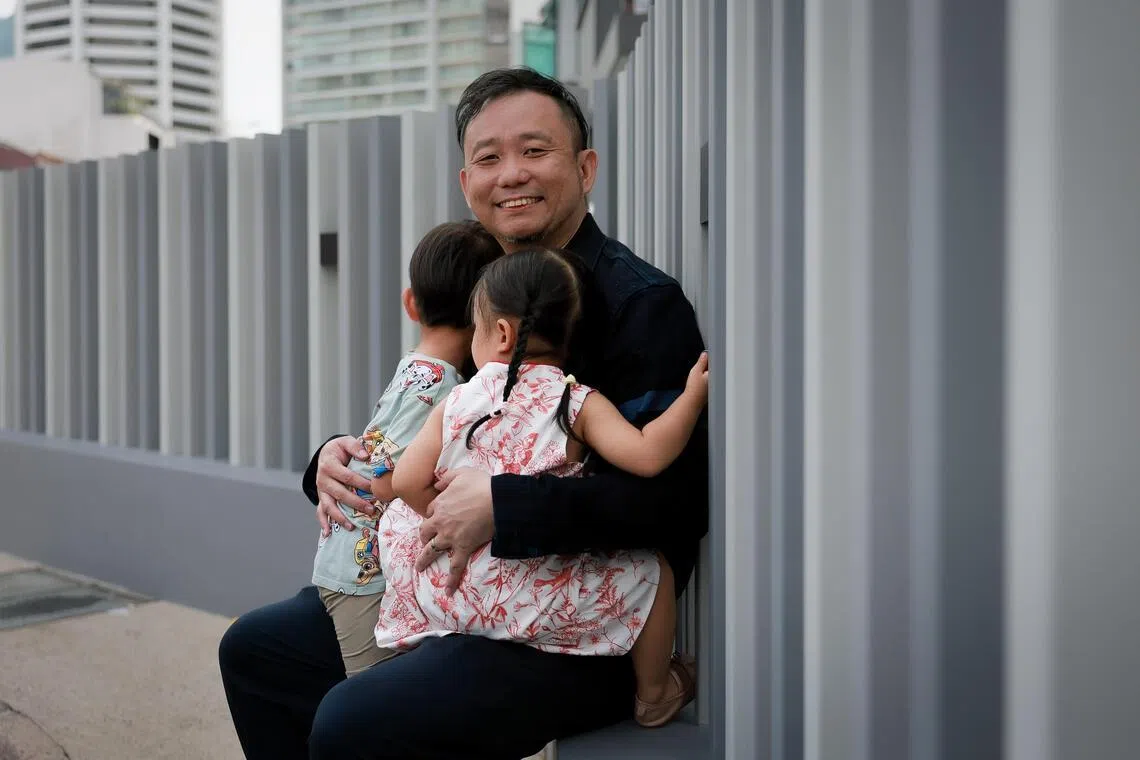
“It’s the vastness of a parent’s love. The overwhelming sense of protectiveness and responsibility that you know you need to embrace, and to live for someone beyond yourself.”
Today, Sng and his homemaker wife, who are both 46, have six children between the ages of two and 16.
Sng said his faith shapes his life choices. Having children is a “privilege”, not a burden, he added.
“There is no set number of children that we wanted,” he said. “Every kid is a joy and a blessing… It’s not to say that parenting is easy, but there’s a fuel – which is a father’s love – that allows us to overcome any hardships.”
Like the Sngs, marketing manager Debbie Leung, 47, and her banking professional husband, Gerald Ng, 49, did not set out with a specific family size in mind.
They have five children, who are between five and 18 years old.
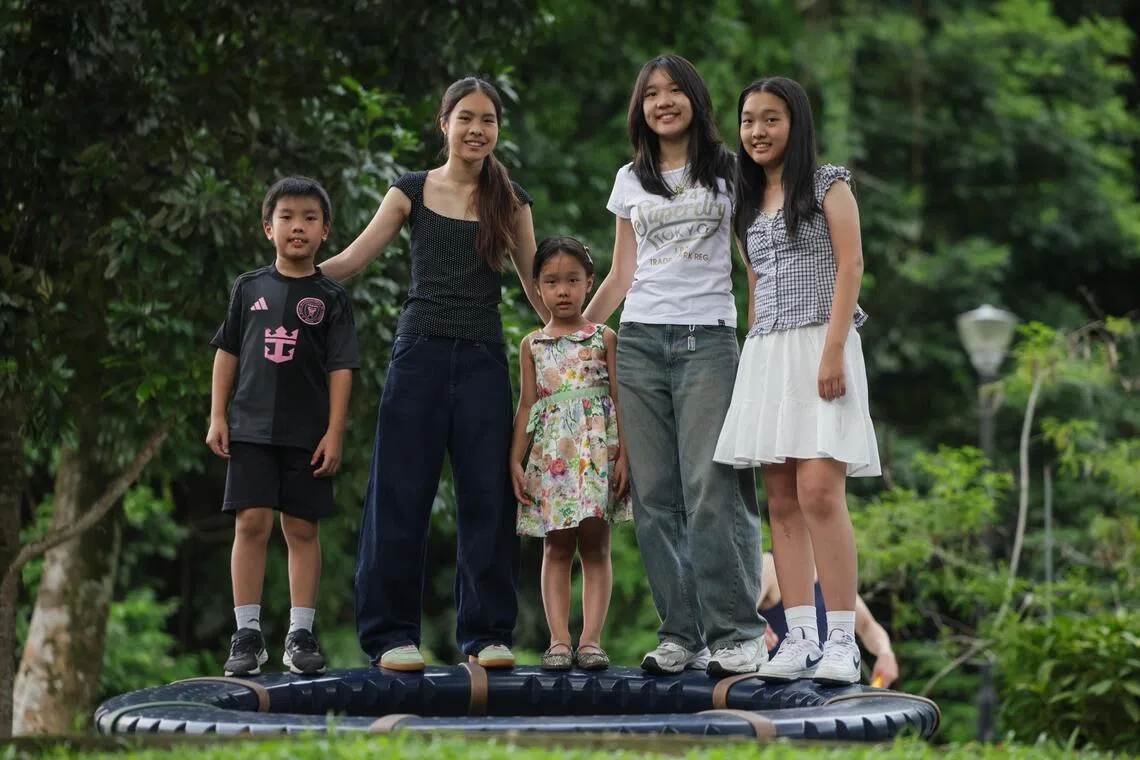
Leung, who cites her close relationship with her two sisters as one reason behind wanting a larger family, said: “Family is the closest people you have, and your siblings will be there for you. So I want my children to have company and support (from their siblings).”
Her first three children are girls, followed by a boy. Hoping for a brother for him to play with, they decided to have another child. They had a daughter instead, although the pair are “very close”, she said.
Leung said being able to work from home, among other flexible arrangements, makes it possible to raise five children while working full-time.
While she worries about each child’s health and education, watching each of them grow and seeing their personalities unfold is one of the joys of having a large family.