
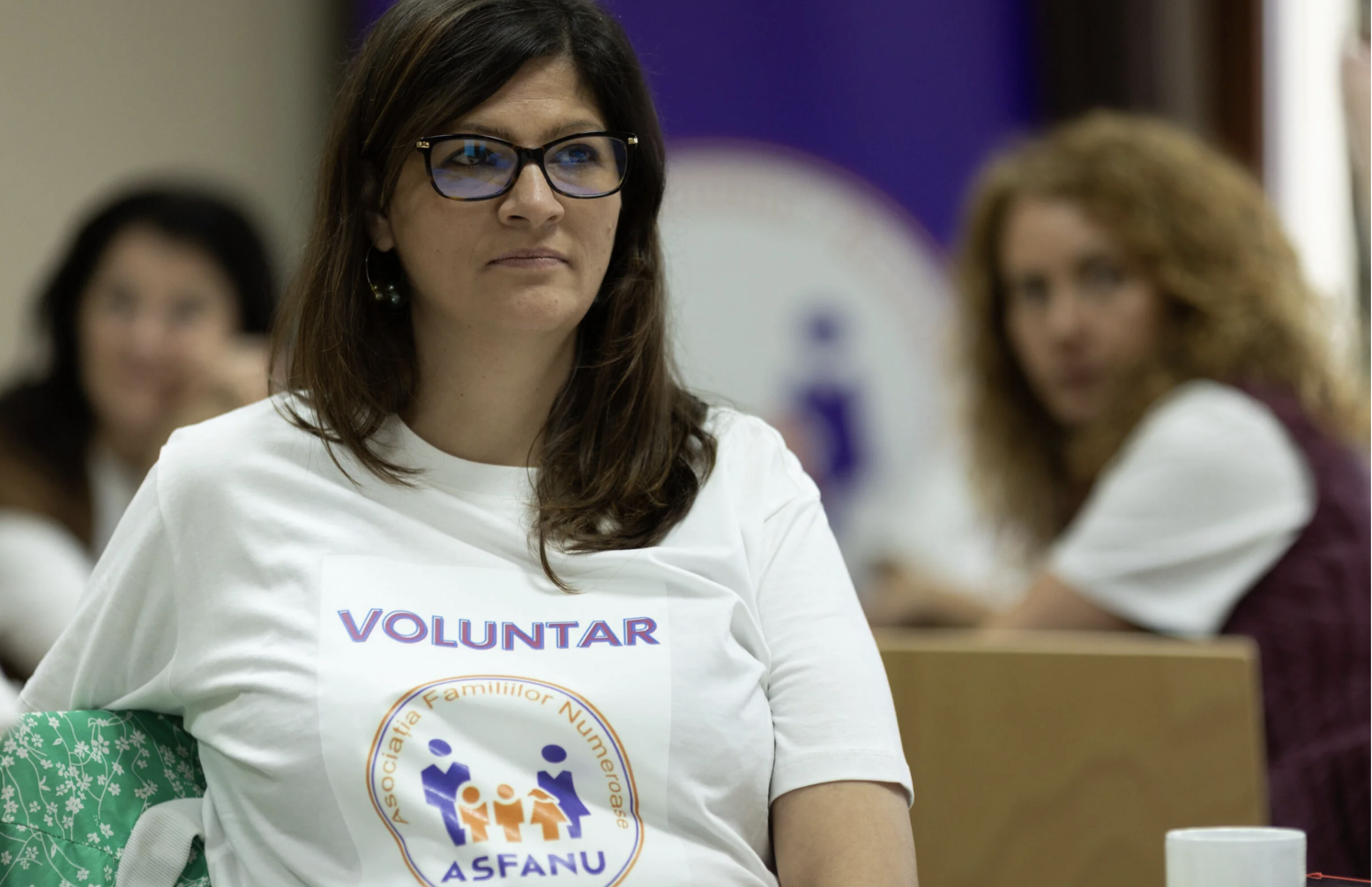
Irina Granzulea, President of the Association of Large Families: “Large families are often viewed through the wrong filters, and the hardest thing is that parents sometimes end up in a situation of justifying themselves”
By thewoman.ro (translation by ELFAC)
Her involvement started from a personal experience – the moment she became a mother of three children and discovered the almost total lack of information, rights and policies dedicated to this category of families. Since then, she has contributed to building a community and real representation for hundreds of thousands of families who, although numerous, often remain invisible in the public space.
In this interview, Irina Granzulea talks about how the Large Families Association was born and its evolution over the last 10 years, but also about the current reality of 3+ families in Romania – from demographic figures and trends, to daily challenges related to education, health or logistics.
The discussion also touches on the topic of social prejudices, the lack of an adequate legislative framework, as well as the concrete initiatives through which the association tries to change perceptions and bring solutions.
The association you lead has become a strong voice for a category of families often ignored by public policies. What was the spark that led to the establishment of this organization and why did you feel it was imperative that large families in Romania be officially represented?
This year, the Association of Large Families ASFANU turns 10 and, if I were to say very simply how it came about, I would say that it was born from a common feeling: that large families are not seen as they really are. It was not an ambitious plan from the beginning, but the desire of parents with three or more children to make their voices heard and to be understood and respected, in a reality that, until then, no one was talking about.
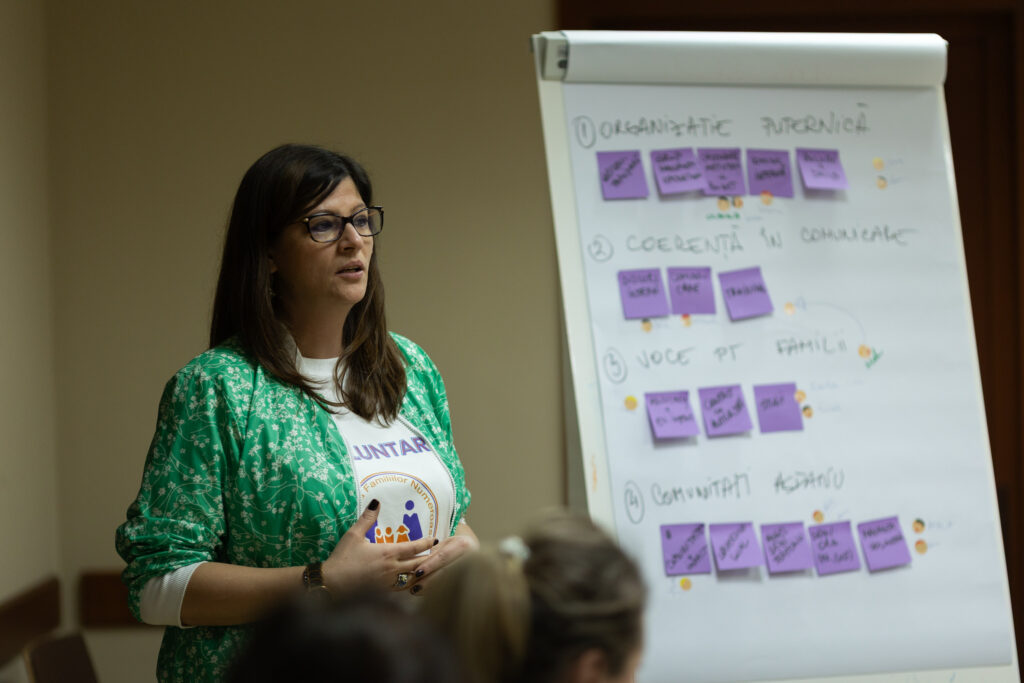
I joined the Association in 2019, when the third child in our family was born and I became the mother of 2 girls and 1 boy. That’s when I started looking for information about the rights of large families, convinced that they exist in Romania, as they do in many other European countries. But I found almost nothing.
And that moment of “it doesn’t exist” was the beginning for me as a volunteer in ASFANU. Because I realized that it’s not just my experience, but that of many families who are simply nowhere: neither in legislation, nor in public policies, nor in important conversations.
That’s how I started getting involved in ASFANU and, together with other parents of large families from all over the country, we started to build step by step what was missing: a voice and a community. The more we are, the clearer the voice of large families is heard and can no longer be ignored.
When we talk about families with three or more children, what figures are we talking about at the national level? Is there a growth trend in this segment or, on the contrary, are we witnessing a decline caused by the current economic context?
When we talk about families with three or more children, we are actually talking about a much larger reality than we imagine: in Romania, there are over 300,000 families with 3 or more dependent children, meaning more than 1,500,000 people.
I remember that in 2019, when I joined the association, there were approximately 221,000 families registered. Today we are talking about over 314,000 families. In the context where fewer and fewer people choose to have children or choose to have only one or two, large families are the ones that continue to grow in Romania. And not only do they exist, but they are, in fact, the only ones that ensure the population replacement rate, that is, that balance so necessary for our future as a society.
And yet, even though we are talking about such an important and “numerous” category, it remains almost invisible. So, beyond the numbers, I think it is essential to understand that we are not talking about a marginal social issue, but about a strategic issue for the future of Romania.
Unfortunately, certain prejudices related to large families still persist in Romania. How does the association fight to change public perception and show that “many” actually means an incredible resource of energy, education and love?
Prejudice is perhaps the most painful challenge. Large families are often viewed through the wrong filters, and the hardest thing is that parents sometimes end up in a situation of justifying themselves . Of explaining why they chose to have a large family, as if they should defend something that is, in fact, natural. Large families, instead of being supported or at least respected, often have to defend their right to normality and dignity.
It is necessary to understand, at a societal level, the reality of large families, which is why ASFANU conducts a permanent study among large families, through which we highlight who they are, how they live and what their needs are. In an overwhelming proportion, families said that they no longer want to be judged in society, but understood. Moreover, the study shows us that many of these families do not benefit from any other support than the child allowance, just like any other family in Romania.
Changing the perception of large families is a priority for ASFANU. And we do this by providing real data, showing who these families are, how they live, what values they pass on. We organize events, bring people together, create contexts in which they can see beyond prejudices.
Because when you really get to know a large family, the perspective changes. You start to see something else: children who grow up learning to share, to take care of each other, to be responsible. You see parents who make an extraordinary effort, with a lot of organization and with an energy that is not divided, but multiplied.
“Our message is that “numerous” means more solidarity, more responsibility, more energy.“
Beyond the joy of a full house, what are the biggest obstacles that parents with many children face in Romania today? We are referring here to education, health, or perhaps even the simple logistics of transportation and housing.
Beyond the joy of a full house, everyday life in a large family is often a continuous exercise in balance.
Education, for example. When you have 3 or more children, the costs multiply: supplies, textbooks, extracurricular activities, transportation. Each child needs something at the same time, and parents must always find solutions, prioritize, and leave no one behind.
Then comes the health part. We’re not necessarily talking about just serious situations, but about everyday things, checkups, treatments, different needs. Access to medical services can become difficult, and the costs, even small ones, add up.
The family home or car are other challenges. Finding a home or car suitable for a large family is not easy at all. Spaces are often designed for smaller families, and cars with 5+ seats involve substantially higher costs.
And on top of all this comes the daily logistics. The schedule of a large family is never simple. School, activities, travel, appointments, everything must be carefully coordinated, while parents also carry out professional responsibilities in parallel. It is a constant effort, invisible from the outside, but very real for those who experience it.
And, beyond all these concrete things, there is a problem at the societal level: large families in Romania are not defined in legislation. This means that, often, even if there are good intentions or supportive ideas, they cannot be easily applied, because there is no legal framework. Basically, families have to manage in a system that is not designed for them.
All these challenges do not mean that large families do not succeed, but they do it most of the time through their own efforts, with a lot of organization and sacrifice. And this is where ASFANU comes in. We speak openly about these realities, we bring them into the public space and we work to make them understood and recognized. At the same time, we support the introduction of concrete measures, adapted to the size of the family, whether we are talking about fiscal policies correlated with the number of children, easier access to education, culture and leisure, or balance between professional and family life for parents of 3+.
Specifically, how does the association intervene in the lives of its members? What are the main programs or facilities (fiscal, educational or social) that you have managed to implement or for which you are currently campaigning?
At the societal level, ASFANU constantly brings the everyday reality of large families into the public space. We conducted the first national study on large families, precisely to understand and show who these families are, how they live and what they need. Annually, ASFANU publishes statistical data on large families, the consumer basket for a decent living and guides for local and national authorities with proposals and models of European good practices that can be adapted in Romania
A concrete example is the Large Family Card, a tool that national and local authorities can put into practice and which offers families recognition and easier access to culture, services or leisure.
In parallel, we constantly monitor measures that have an impact on large families and come up with concrete proposals so that public policies take into account the 3+ reality, namely that, in these families, the number of children is always greater than that of the adults who support them.
For us, what happens every day in the lives of families is equally important. That is why we organize meetings, workshops and events where parents can talk openly, exchange ideas and support each other. At the same time, we create contexts for children in which they can meet other children from large families, like them, and we support them through educational activities, cultural events and events promoting performance and talent.
Essentially, ASFANU’s role is to support parents of 3+ in their communities, to encourage them to speak about themselves and for themselves, to support children and their potential, and, above all, to help communities become more united and supportive.
You are connected to international networks in the field (such as ELFAC). What can we learn from other European states regarding the protection of large families and what could Romania implement immediately, if there were the political will?
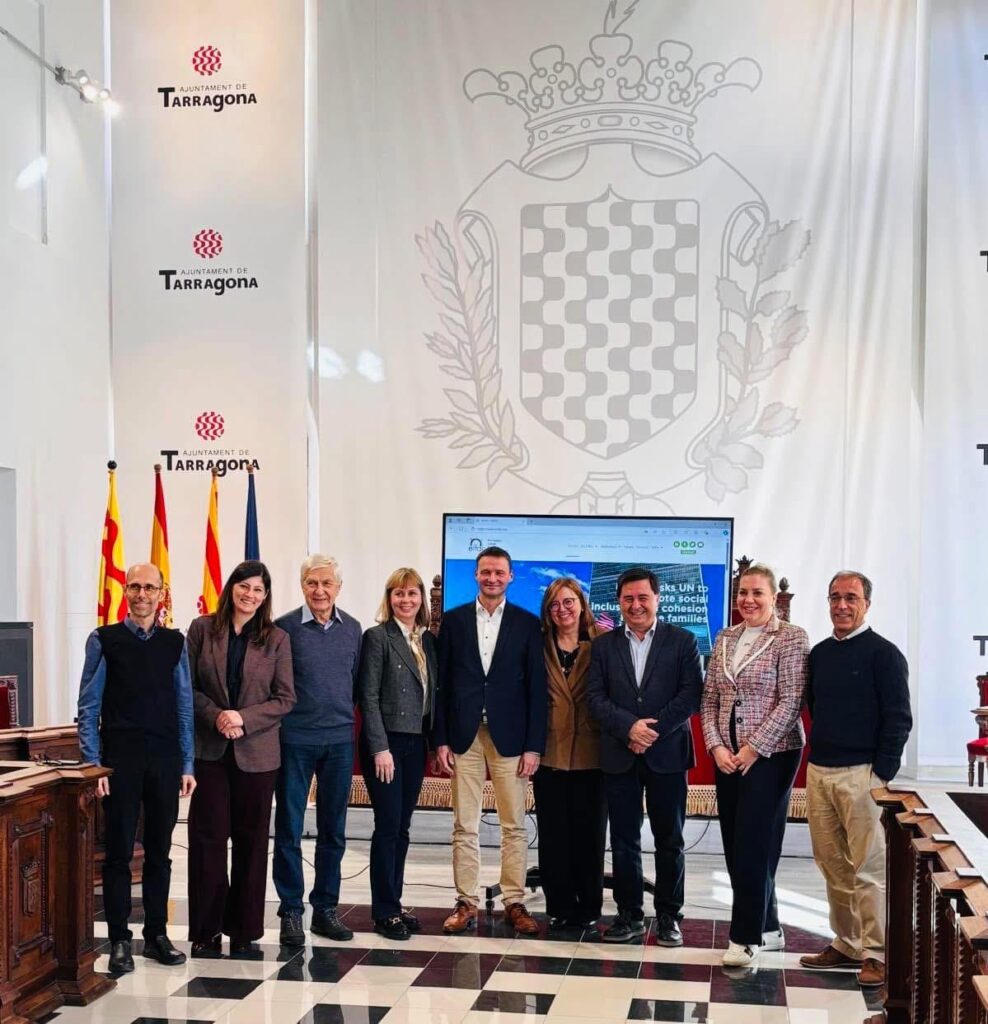
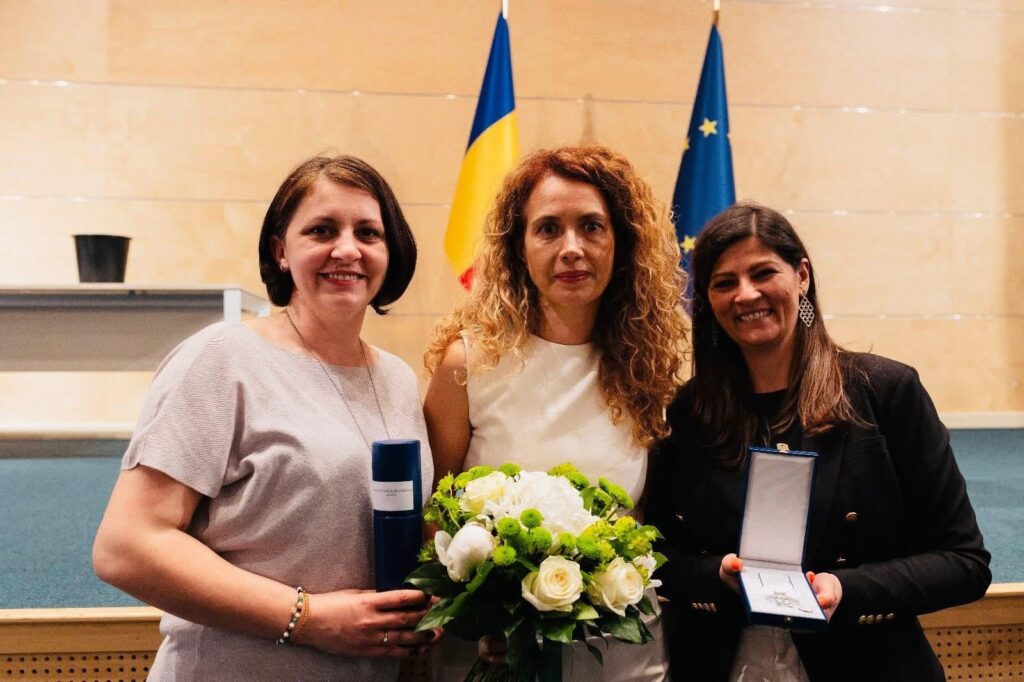
ASFANU has been a member of the European Confederation of Large Families (ELFAC) since 2020, an international organization that brings together associations from 29 countries and supports, at European and global level, the rights of large families. Starting with 2024, I am part of the Executive Board of ELFAC, which gives us a direct perspective on policies and initiatives dedicated to families at an international level.
This connection helped us understand much more clearly what real support for large families looks like in practice. In countries like Spain, Poland or Hungary, there are policies dedicated to families of 3+: tax benefits adapted to family size, easier access to education and transport, but also measures that support the balance between professional and family life, along with care services adapted to the real needs of parents.
At the same time, ASFANU is part of the Executive Board of the European Network of Family Friendly Municipalities, created by ELFAC in 2020, which brings together over 170 cities in Europe that implement local family-friendly policies and exchange good practices. From Romania, Bacău and Brașov are already part of this network, and ASFANU is constantly working to increase the number of cities in Romania that join this network.
For ASFANU, membership in ELFAC is an opportunity to be connected with associations of large families in Europe that also fight for the rights of large families. For example, through an Erasmus+ project, ASFANU volunteers, parents from large families, participated in a training program at the Association of Large Families in Poland, where they learned how to become more civically involved and how to concretely support the rights of large families.
And above these practical examples, I believe that the most important thing we learn from this European experience is that support for families is not a social gesture, but a strategic investment in the future.
And Romania does not have to invent solutions from scratch, they already exist and work in Europe. With political will, measures dedicated to large families can also be implemented in Romania, and ASFANU’s role is to make the connection between these European examples and the reality in Romania, so that, step by step, they become normality here too.
On May 1st, you are organizing a Gala dedicated to talented children from these families. What is the concept behind this event and what message do you want to convey to the audience by choosing the location and the timing?
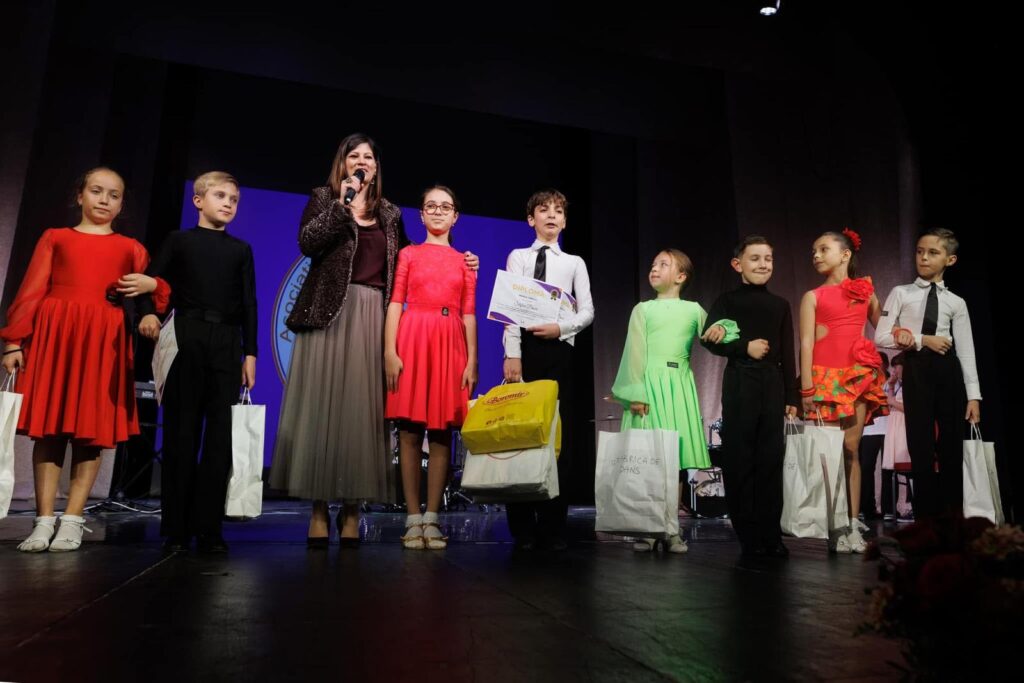
The National Gala of Talented Children from Large Families emerged from the desire to change the way large families are viewed. Most of the time, when we talk about these families, the discussion automatically goes towards needs, difficulties, and shortcomings. We felt it was important to shift this perspective. Let’s show the other side and perhaps the most important: the potential of children from large families.
The gala is a true celebration of large families, a space where children take the stage and are seen for what they are – talented, hardworking, disciplined – and parents are honored for all their effort and dedication.
This year, 146 children from families with 3 to 11 children, from over 100 families and 20 counties, had the courage to register for the National Gala of Talented Children from Large Families and put their talent in the spotlight. Their talents were evaluated by an exceptional jury: Elvira Deatcu (actress and mother of 2 children), Călin Goia (singer and father of 3 children), Ioana Mârza (entrepreneur and mother of 4 children), Laura Cosoi (actress and soon-to-be mother of 5 children), Adriana Scripcariu (artist and mother of 6 children).
On May 1st, at Wonderland Resort in Cluj-Napoca, we invite you to meet them. In the Orhideea hall, starting at 3:00 PM, an event will take place that celebrates the talent and courage of these children to show themselves to the world as they are.
Often, in large families, financial resources are directed towards basic needs. How difficult is it for a child from a large family to cultivate a talent (music, sports, art) and how does the Wonderland Gala help them stand out?
For a child from a large family, the path to cultivating a talent is not impossible, but it is often more difficult. Not because there is no desire or support from the parents, but because resources must be shared. And the priorities are, naturally, the basic ones: education, daily needs, the balance of the entire family.
This sometimes means more effort to get to the same point that other children reach more easily. Children from large families have extraordinary potential. They have discipline, perseverance, patience, because they learn all these things every day, at home.
The National Gala of Talented Children from Large Families brings these extraordinary children to light and offers them a form of recognition that matters enormously to them, their families, and other children from large families who need to believe in their potential.
Can you share a short story about a child who will be awarded at the Gala? What does this public recognition mean to him and his family?
Every child who reaches the stage actually has a story behind it. A story that is not just about talent, but about perseverance and about an entire family that makes efforts, day after day, for that child to follow their passion.
I remember a very dear moment from the first edition of the Gala of Talented Children from Large Families that ASFANU organized in 2024 in Brașov. Then, 42 children from large families with 3 to 7 children took to the stage of the National Opera in Brașov to show their talent.
At the end of the show, my youngest son, who was 5 years old at the time, came to me and said very firmly: “Mom, at the next gala I want to go on stage too, because I’m talented too and I come from a large family.”
In fact, this is the message of the Gala: beyond the awards and applause, the Gala brings confidence, pride, the joy of feeling that you belong to a community where you are seen and appreciated. For children, it is the moment when they understand that their talent matters. For parents, it is a confirmation that their effort – logistical, financial, emotional – does not go unnoticed.
And, perhaps most importantly, it’s the moment when an entire family feels that they are simply proud of who they are.
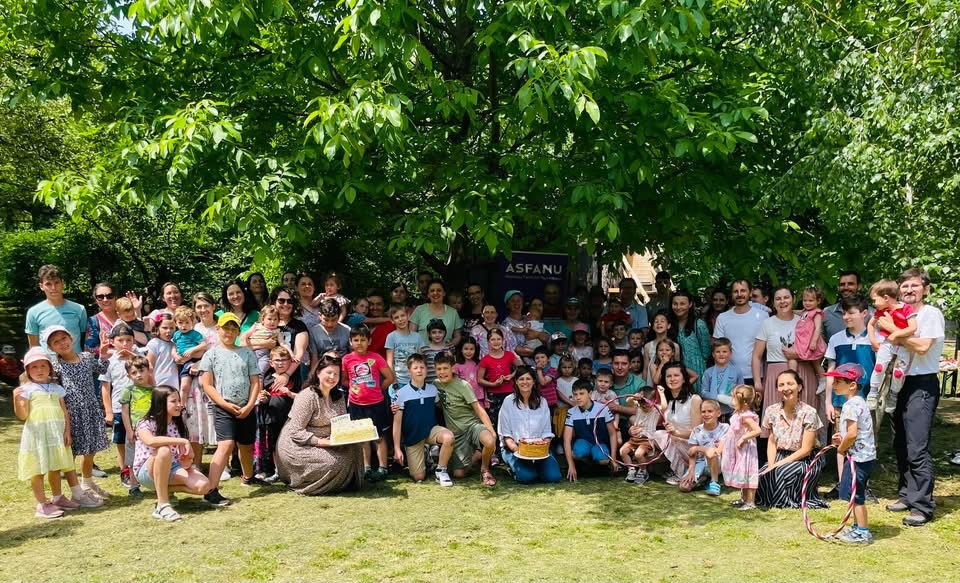
For The Woman readers who juggle between career and family, but also for those who fear the idea of having a large family due to the current instability, what message of encouragement do you have, from the perspective of a woman who sees the “miracle” multiplied daily?
I think we all experience these fears regardless of whether we have children or not. We live in a time when instability is felt in many ways: financially, professionally, emotionally, and it is natural to ask ourselves questions. But, at the same time, I think it is important not to let fear decide for us. There are choices that give meaning to life, and family is one of them.
If I were to say something from all the experience of these years at ASFANU, it would be that behind every family there is much more than what is seen from the outside. Over time, I have met a lot of large families, with 3, 4, 5 and even 10 children, and what remains a constant is the admiration I feel every time I discover their life stories. Because there is a courage and determination that I see in parents, I see children who learn team spirit and mutual help, I see mothers who have extraordinary professional training and life experience, I see children with special talents who deserve to be encouraged and supported.
I think that when you make the decision to bring a child into your life, whether it’s your first or not, it’s important to not only look at what seems difficult, but also at what you will gain. Because beyond the challenges, there is an enormous joy and meaning that you can’t replace with anything.
And here’s something else important: you’re not alone. There are many women and families going through the same experiences as you, and with the arrival of a child you often discover communities where you can find yourself, people who understand you and who can support you. And this often makes the difference, because, as the saying goes, “it takes a village to raise a child.”
–
Editor: Bianca Sharma